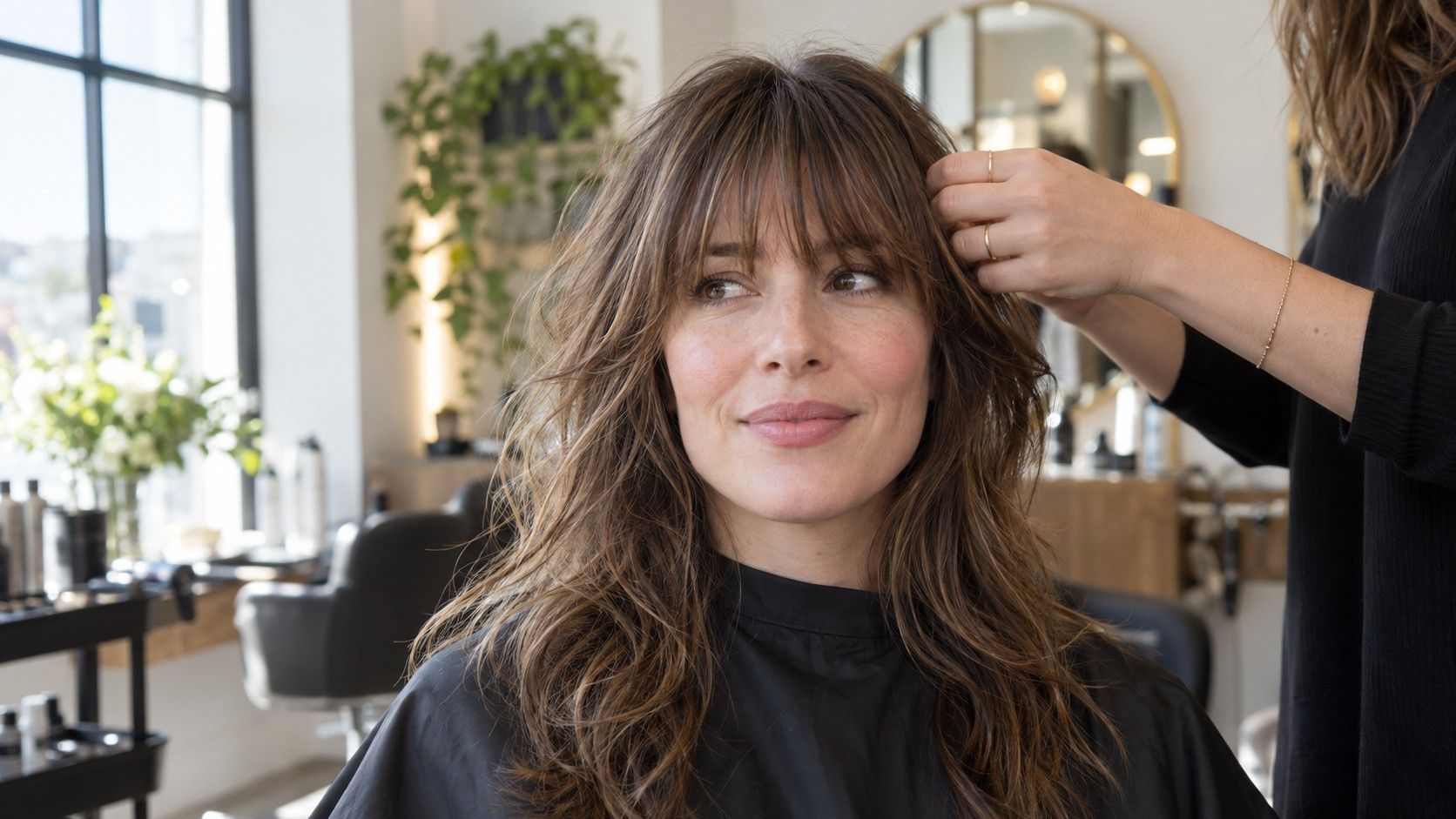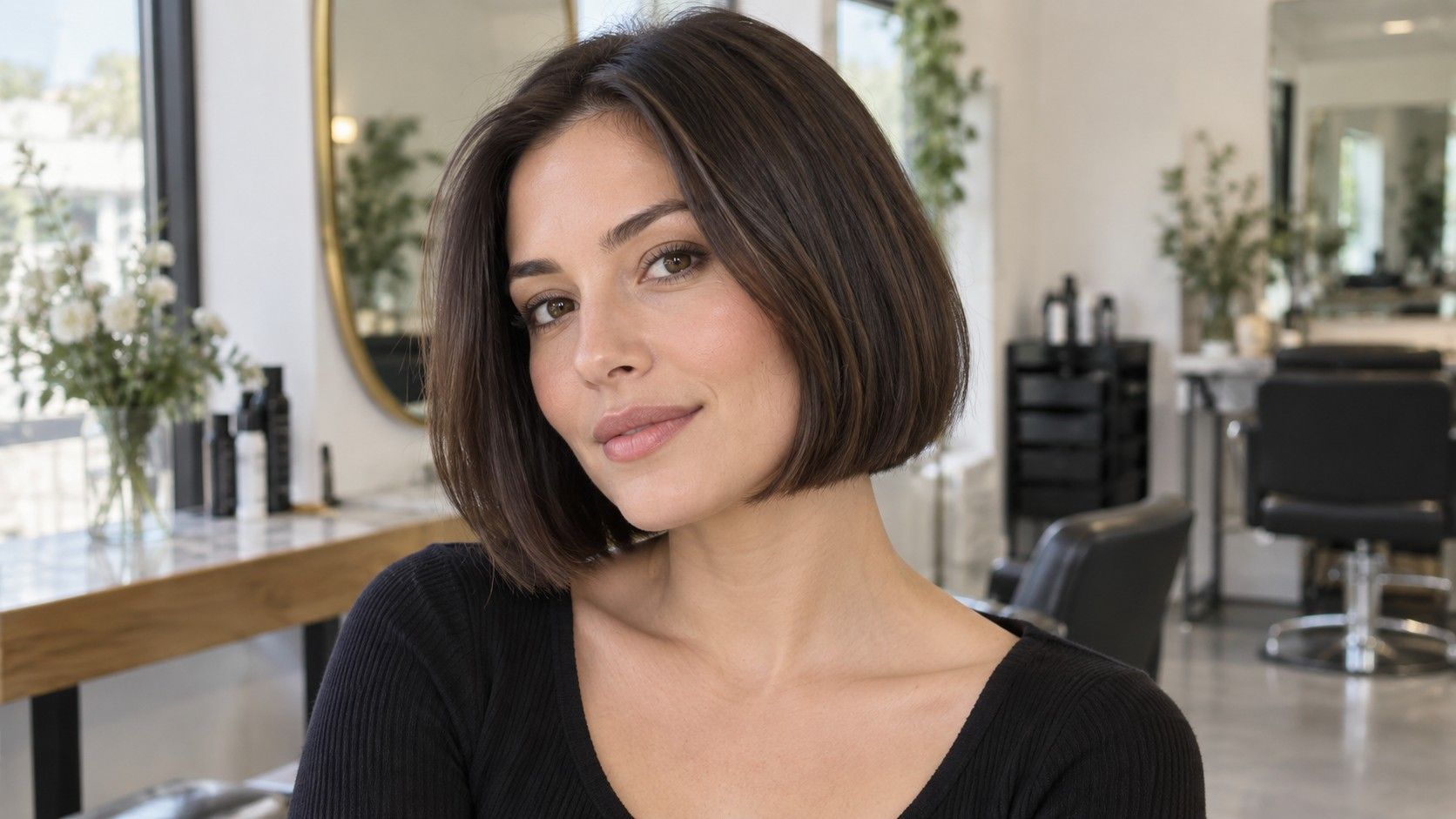
Bangs can change where the eye lands, but they do not need to turn the upper face into something to conceal. The useful question is whether you want a little softness at the hairline, stronger coverage, or a new balance with your brows and cheekbones. Your natural part, hair density, and the way your fringe behaves at 8 a.m. matter more than a face-shape label.
Choose coverage without hiding your face
A high forehead is simply one proportion among several. Before asking for bangs for a big forehead, stand in daylight with your hair pulled loosely back and look at the whole outline: hairline, brow placement, cheek width, jaw, and the amount of hair around the temples. A fringe that begins too far back can feel like a helmet; one that starts too close to the hairline may split before lunch.
Ask the stylist to show where the fringe section would begin before anything is cut. On fine hair, a narrow triangular section usually keeps enough density in the rest of the haircut. Thick hair can support a wider section, but the ends still need air. The goal is not a solid wall. A few longer pieces at the temples often make the transition from fringe to haircut look deliberate rather than abrupt.
Think about your eyebrow routine too. A brow-skimming fringe draws attention to brows, glasses, and eye makeup. A shorter, textured version leaves more forehead visible and tends to look lighter. If you dislike hair touching your lashes or constantly move it aside, that is useful information, not a failure to commit to bangs.
Curtain bangs and centre parts
Curtain fringe is often suggested as the best bangs for a large forehead because it softens the hairline while keeping a vertical opening through the centre. It works especially well when the hair already parts near the middle and has enough bend to stay away from the eyes. The shortest point can sit around the brows or upper cheekbones, with the outer edges getting longer into face-framing layers.
The caveat is the centre part. A strong cowlick may push both sides apart and expose more forehead than expected. That is not necessarily bad, but it changes the effect. During the consultation, dampen the front section and let it dry in the direction you normally wear it. A stylist can then decide whether the part should be slightly off-centre or whether the fringe needs a little more length and weight.
At home, curtain bangs respond better to a small round brush than a large one. Blow-dry the roots forward first, then direct each side away from the face. This prevents the flat, separated look that can make a fringe seem accidental. If you air-dry, use a light styling cream and accept a softer, less symmetrical result.
| Fringe shape | Usually suits | Daily reality |
|---|---|---|
| Long curtain bangs | Natural middle or soft side parts | Easy to tuck back; needs root direction |
| Side-swept bangs | A pronounced side part or strong cowlick | Often forgiving as it grows |
| Full brow-length fringe | Medium to dense hair that holds a line | Needs regular drying and frequent trims |
| Wispy textured fringe | Fine hair or a low-commitment first try | Light but can separate in humidity |
When a full fringe makes sense
A fuller fringe gives the most visible coverage and can look striking with a blunt bob, long layers, or naturally straight hair. It is not automatically the answer for a high forehead, though. The right density depends on how much hair you have at the front and whether your hair expands in damp weather. A thick fringe cut very bluntly can become triangular if the side sections are not blended into the haircut.
For a softer result, ask for internal texture rather than a fringe that is thinned indiscriminately at the ends. Removing too much hair can make a bang stringy and difficult to style. Controlled point-cutting at the perimeter gives movement without sacrificing the support that keeps the fringe together.
Length is a practical choice. A fringe resting at the lashes photographs nicely, but it may annoy anyone who drives, wears contacts, or works out before washing their hair. Brow length is more functional. Slightly longer, split-to-the-side bangs are the least dramatic option when you are unsure. Start longer: hair can always be shortened at the end of the appointment.
Side-swept bangs for a changing part
Side-swept bangs are useful when a centred fringe feels too formal or your hair insists on a diagonal direction. They create a soft line across the forehead rather than an even horizontal edge. A longer sweep that lands around the cheekbone works with ponytails and updos, which makes it a sensible first fringe for people who wear their hair up several days a week.
The common mistake is cutting the short corner too short. When that piece springs up, it can sit above the brow while the rest of the fringe hangs down. Leave enough length at the parting point to account for shrinkage, especially in wavy or curly hair. Bring photos of your own hair on a normal day rather than only saved pictures of someone else's texture.
Changing the part occasionally can stop one area from becoming flat, but do not expect a hard middle part to convert overnight. The roots retain memory. Use a nozzle on the dryer, direct the fringe where you want it, and let it cool before touching it. A tiny amount of flexible hairspray at the roots is usually more useful than heavy wax on the ends.
Work with density, texture, and a cowlick
Density changes the entire calculation. Fine hair can produce beautiful wispy bangs, yet a very wide fringe section may leave the sides looking depleted. Dense hair can make a polished full fringe quickly, but it may need more shaping at the temples so it does not cast a heavy shadow over the eyes. Texture also matters: a bang that looks smooth when wet can curl up two inches after drying.
A cowlick at the hairline is not a reason to avoid bangs; it is a reason to design them around the growth pattern. The most reliable test happens in the salon without a blowout. Let the front dry naturally, see where it divides, and decide whether to follow that split with curtains, anchor it with a side fringe, or leave the central section longer. Cutting against a strong cowlick creates a daily argument with a brush.
If you have waves, ask for the fringe to be checked dry after the initial cut. That final adjustment reveals the real length and texture. It also prevents the disappointment of leaving with a smooth salon fringe that bears no resemblance to your hair once it meets ordinary humidity.
Styling and trim realities
Every fringe is a small styling commitment. Bangs collect oil, skincare, sunscreen, and forehead moisture sooner than the rest of the hair. Many people wash just the fringe between full wash days, then dry it immediately. Leaving it damp to air-dry after a quick rinse is a reliable route to a split or a cowlick taking over.
Dry from the roots in alternating directions first: left, right, forward, then the final direction. That simple reset removes the crease created while sleeping. Finish with low heat and a cool shot. Heavy dry shampoo can make bangs dull and stiff, so use it sparingly at the roots rather than coating the fringe.
Plan a fringe trim every three to five weeks, depending on the shape and how quickly your hair grows. A curtain fringe can stretch longer; a precise full fringe cannot. Do not try to recreate salon texturising with kitchen scissors in bright bathroom light. If the length is bothering you, pin it aside for a few days or book a small maintenance trim. The best bangs for a high forehead are the ones that still suit your routine on an ordinary Tuesday.