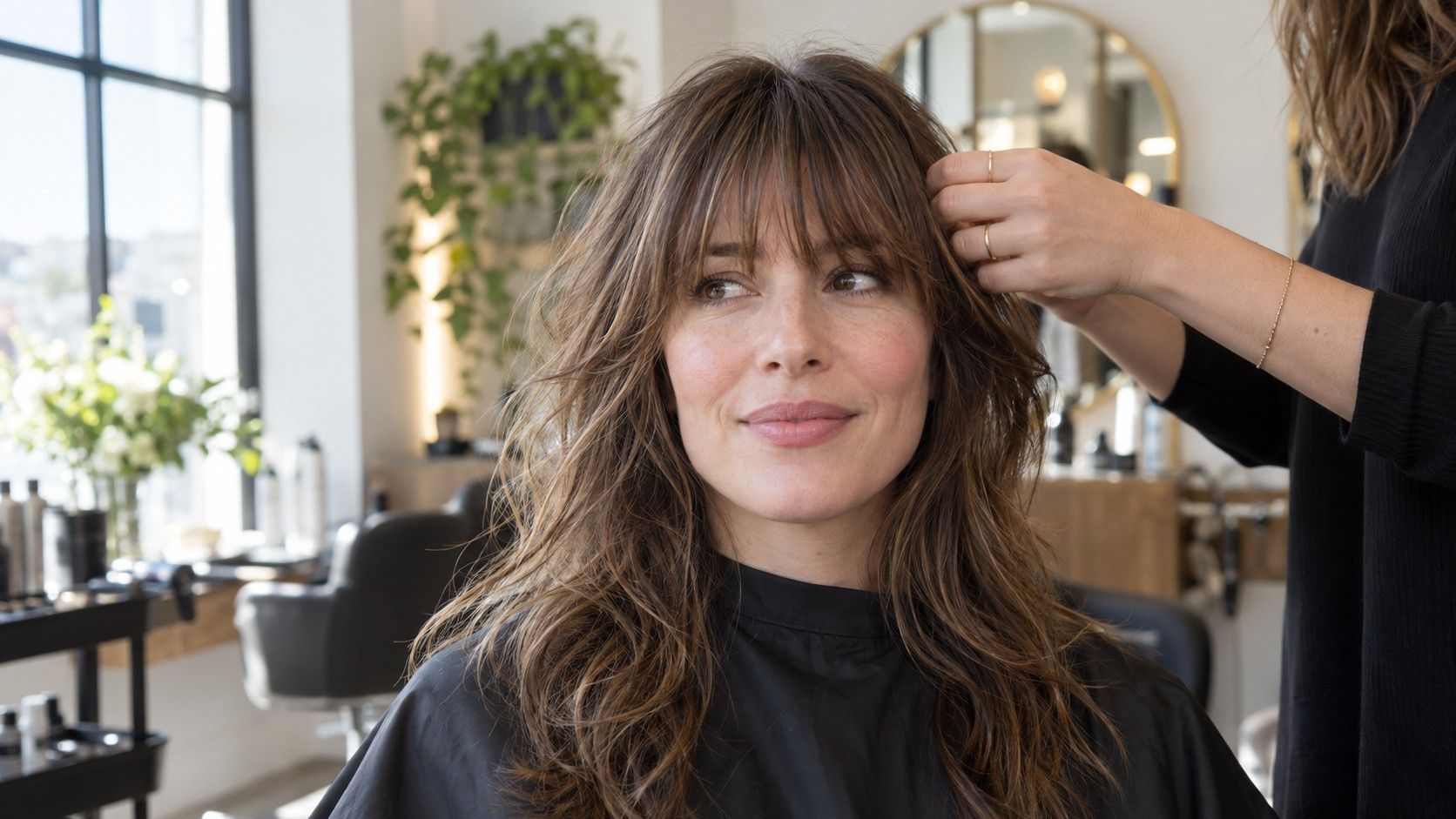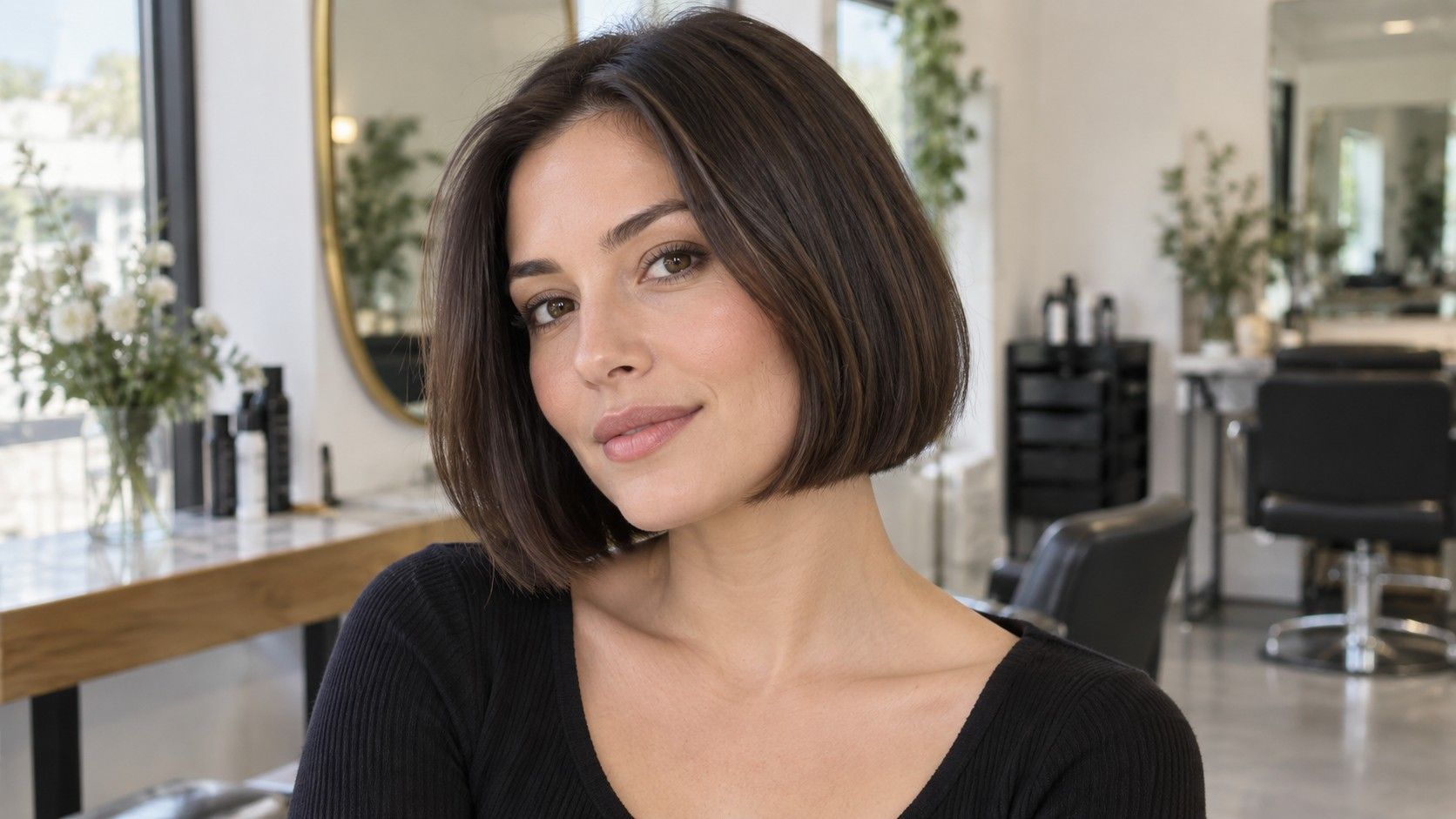
Bob haircut lengths are often described with tidy labels, but hair does not stop at a label—it stops at your chin, jaw, neck, or collarbone, and each point behaves differently when you turn your head. The smart choice is not the length somebody says suits a face shape; it is the place where your cut still works with your texture, your part, and the amount of styling you will do on an ordinary morning.
Measure the bob against landmarks you can see
Before the cape goes on, stand in front of a mirror and point to the exact line you mean: middle of the ear, corner of the jaw, bottom of the chin, nape, or collarbone. “Short bob” is too vague when two centimeters can move the visual weight from the cheek to the neck.
Use a hair clip to fold the length up and take side-view photos. The front view can be flattering while the profile reveals that the cut lands at the widest point of the jaw or flips outward at the shoulder. Both views belong in the decision.
Hair density changes the reading as much as length. Fine hair can look fuller when it stops cleanly above the shoulder; very dense hair may need internal weight removal so a jaw-length bob does not become a triangle by lunchtime.
Choose chin length when you like a visible shape
A chin-length bob, including the familiar French bob territory, puts the line close to the face and makes the cut itself part of the outfit. It can feel brisk and neat with a tucked ear, but it also exposes cowlicks at the front and leaves less room for a quick ponytail.
The practical test is your natural bend. If the ends turn under with little help, a blunt chin line may be easy. If they spring outward as soon as they dry, ask for a slightly softer perimeter or a length that clears the chin rather than fighting it every day.
Do not let a face-shape rule settle it for you. A strong jaw can look excellent with a bob that meets it; the only question is whether you want to emphasize that graphic line or prefer the hair to travel below it.
Use jaw and neck lengths for a flexible middle
A bob that lands between jaw and neck has more room to adapt than the shortest versions. It can still look deliberate with a sharp baseline, yet it is long enough to soften with a bend, a side part, or a few pieces left forward when the rest is clipped up.
Ask the stylist to show where the front will fall after the nape is cut. A steep A-line can make the face framing much longer than the back, while a near-level cut gives a quieter silhouette. Neither is better; they simply create different maintenance around the neckline.
This middle zone needs an honest conversation about trimming. The shape is most obvious while the line is fresh, and even a few weeks of growth can make a precise neck-length bob feel like an accidental in-between cut. If regular trims are unlikely, leave a little softness.
Pick a collarbone bob for easier grow-out
The collarbone bob, often called a lob, is the safest place to stop when you want a visible change without living in the shortest version. It can be tied back, it has room for natural wave, and its regrowth usually feels like a transition rather than a crisis.
The risk is an indecisive hemline. Hair that rests exactly on the shoulder can flick outward, especially with a blunt cut and coarse texture. Moving just above the shoulder or well below it is often more reliable than stopping at the point of contact.
Bring your usual jacket or high-neck top to the appointment if those are daily staples. Collar and shoulder friction affects how the ends sit, and it is more useful to test that real detail than to rely on a chart alone.
A quick comparison before you commit
| Where it stops | What it emphasizes | Daily reality |
|---|---|---|
| At the chin | A clear, graphic face frame | Little ponytail room; cowlicks show |
| Jaw to neck | A flexible classic bob | Shape benefits from regular trims |
| Near the collarbone | Movement and easier grow-out | Avoid the shoulder flip point |
Make the decision easier before the appointment
Save two or three images that show the same idea on different days, then add one unfiltered picture of your own haircuts situation. Write down what you want to avoid as clearly as what you want to gain: too much upkeep, a harsh line, obvious fading, a shape that needs heat every morning, or a result that feels unlike your usual self. That small preparation gives the consultation something real to work with.
It also helps to describe the last result that disappointed you. Was the problem the first week, the third wash, the regrowth, the way it sat at the side, or the extra time it asked of you? A stylist can adjust placement, texture, tone, weight, or finish when they know the actual failure point. Without that detail, people often repeat the same choice with a new name and are surprised by the same outcome.
Give yourself permission to choose the quieter version first. A bob haircut lengths explained direction can be strengthened later with another gloss, more contrast, a shorter line, or a slightly fuller front; undoing a too-dark color, too-short fringe, or over-lightened length is slower. The best plan leaves a little room for the hair to answer back after you have lived with it for a week.
Check the result in ordinary light
Before you leave, step close to a window if the salon has one, take a front and side photo, and move the hair the way you normally do. Look at the parting, hairline, ends, and the places that touch your glasses, collar, or cheeks. Fresh blow-drying can hide a heavy line, a pale stripe, or a fringe that sits too high; a quick reality check makes a small adjustment possible while the appointment is still in progress.
Then let the result settle before judging it. Wash and style it in your own bathroom, using your usual products and no heroic effort. If a detail still bothers you, describe that specific detail when you return rather than saying the whole thing feels wrong. Clear observations—one side lifts, the root looks warmer, the ends flip, the center falls in the eyes—are how a promising first choice becomes a dependable one.
The table is a starting point, not a verdict. Take it to the appointment together with two daylight photos of your own hair, explain what you do on a busy morning, and leave room for the stylist to adjust the plan to the hair that is actually in front of them. The most convincing result is usually the one that still feels like yours when the novelty wears off.