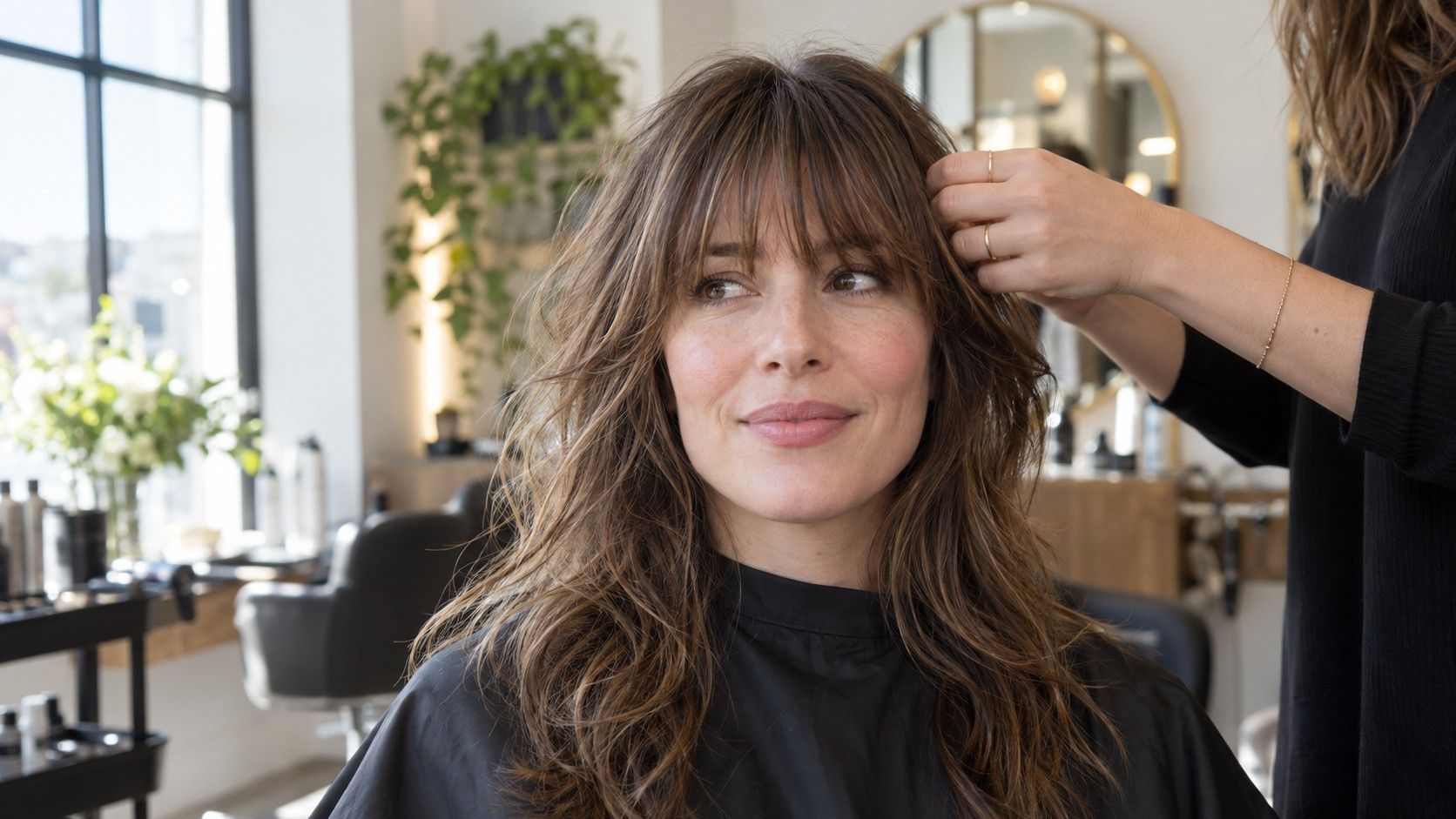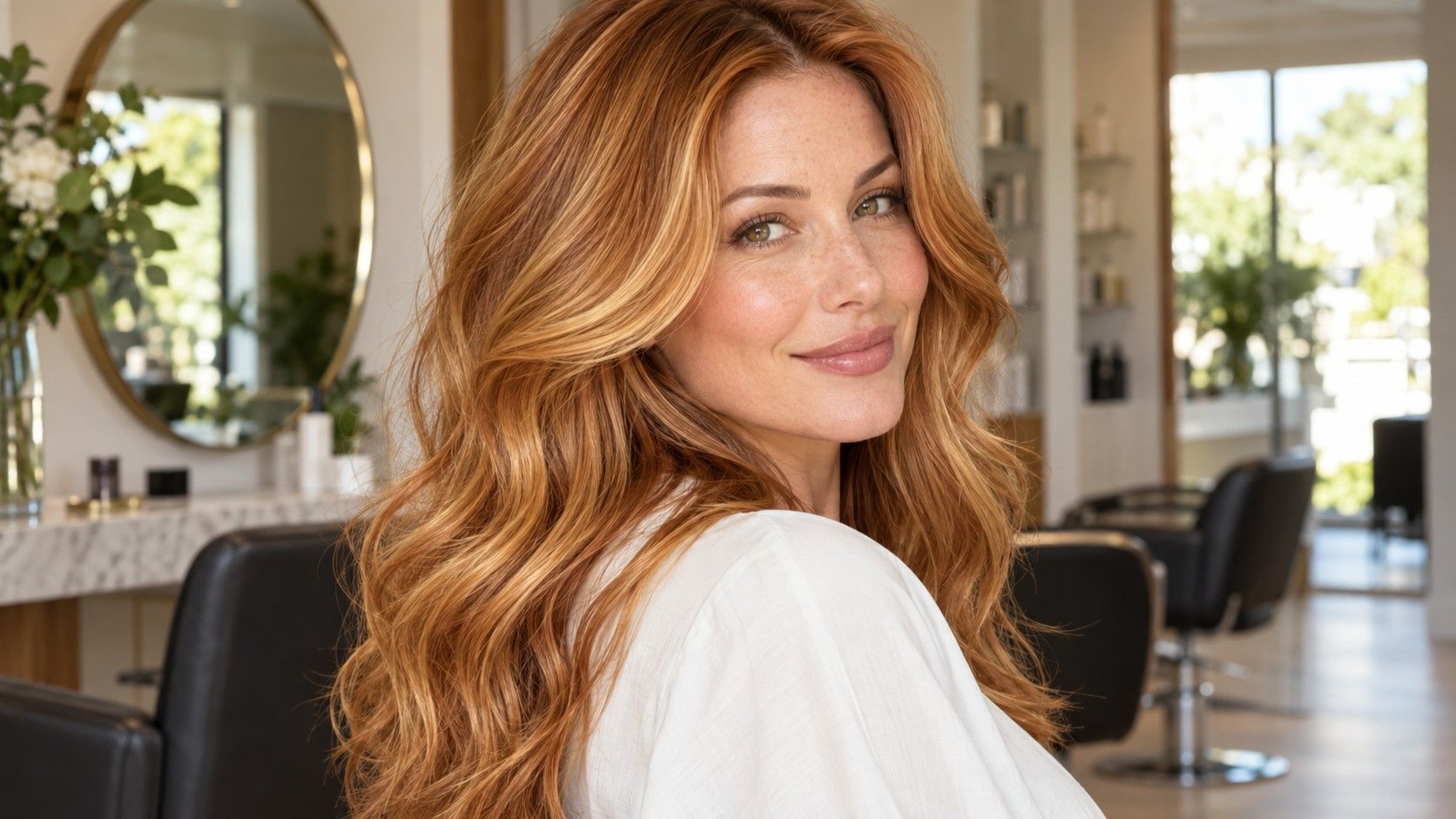
Bright Spring hair colors are about clarity more than simply being warm or blonde. Some people can wear a clear, sunny shade and look as though they slept well; put the same person in dusty ash or a very muted brown and the face seems to retreat. That is a useful salon observation, not a command to dye your hair a cartoon colour. The aim is to find enough shine, saturation, and contrast to keep the features visible without making the hair arrive in the room first.
Notice the difference between bright and merely warm
Warm shades contain yellow, gold, or red. Bright shades also have a clean, clear quality. Compare honey blonde with muted beige, clear copper with auburn-brown, or chestnut with smoky mushroom brown. None is objectively better, but the first of each pair reflects light more cleanly. If your skin looks lively beside crisp colours and dull beside soft, dusty fabrics, that is why clear colour may make more sense than a heavily toned-down result.
Do the comparison under a window rather than judging from the salon’s warm lamps. Indoor lighting is generous to golden and red hair; cloudy daylight shows whether the colour has turned brassy, flat, or disconnected from your complexion. Take one photograph without portrait mode. A clean shade usually lets the eyes, cheeks, and lips remain distinct in that ordinary image.
Pick blonde options with clarity, not bleach for its own sake
Honey blonde, golden blonde, and clear warm beige are productive starting points. They have enough gold to avoid the grey cast that very icy blonde can create, but they do not have to be yellow. The best hair color for Bright Spring is often multi-dimensional: a slightly deeper root for structure, brighter golden pieces at the face, and natural-looking lowlights so the overall effect does not become a solid sheet of lightness.
Platinum is not forbidden, but it is a demanding choice. It needs a clean lift, careful toning, and hair strong enough to stay glossy. On a naturally dark base, a more realistic route may be honey balayage or a warm blonde face frame. It gives the same light-catching effect while allowing the root to grow in without an abrupt line every few weeks.
| Desired effect | Clear shade family | Common trap |
|---|---|---|
| Sunlit and soft | Honey or golden beige blonde | Over-toning it grey |
| Bright near the face | Golden face frame on a deeper root | Very wide striped highlights |
| Rich but lively brunette | Chestnut, golden brown, warm espresso | Matte ash lowlights |
| Noticeable red | Clear copper or strawberry copper | Dark burgundy that looks heavy |
Use brown and red when blonde would be too much work
Bright Spring best hair colors do not have to sit at the lightest end of the chart. Golden brown, chestnut, and a warm espresso with amber dimension can be excellent when brows and lashes are dark. The important thing is reflected light. A glossy brown with fine warm ribbons feels richer and clearer than a flat, blue-ash brunette, even though it is just as dark from across the room.
Clear copper is another compelling option, particularly when your natural hair already has warmth. It is different from deep mahogany or wine red: it is lighter, more orange-gold, and visually more direct. Start with a copper gloss or strawberry panels if the commitment worries you. Red fades, and knowing whether you enjoy its softer afterlife is more useful than admiring it on appointment day.
Keep dimension clean instead of adding every possible highlight
When a colour feels dull, the instinct is often to add more foils. That can create the opposite problem: too many competing light pieces, a blurred root, and ends that lose shine. Brightness comes from contrast and surface reflection as much as from pale hair. A small number of well-placed golden highlights around the eyes can do more than a full head of random lightness.
Ask the colourist where the darkest area will remain. A root shadow, lowlight, or untouched underneath can give the lighter areas a frame. This is particularly useful if you wear your hair in a ponytail or part it differently from the reference photo. Look at the colour with your normal part, then pull it back before approving it; both views should look deliberate.
Plan for shine and saturation after the first wash
Clear shades show dullness quickly when hair is dry or overloaded with purple shampoo. A gentle colour-safe cleanser, heat protection, and a periodic gloss often matter more than buying a stronger toner. Purple shampoo is useful when blonde becomes genuinely yellow, but used indiscriminately it can turn a lively honey blonde beige-grey. Treat it as a targeted correction, not a weekly ritual.
Maintenance also includes timing. If you enjoy a very bright hairline, schedule toner or face-frame refreshes before it becomes a hard regrowth band. If appointments are rare, choose blended colour and let natural depth do some of the work. A shade that is technically perfect but impossible to maintain will not stay clear for long.
Make the consultation about the effect you want to see
Bring images that specify three things: brightness level, warmth level, and placement. A person may love the honey in one image but the root depth in another. Saying that out loud prevents the colourist from copying the wrong detail. Mention any colours that have made you look washed out, especially flat ash, heavy black, or dark red, because that history can be more valuable than a seasonal label.
Check the finished hair outside the salon and take a photo in daylight. Bright Spring hair colors should read as clear and lively in a real street scene, not only under a polished mirror light. If the result gives your eyes definition, keeps your skin even, and fits your willingness to refresh it, you have found a shade that works rather than a theory you have to defend.
Wait through a normal wash-and-style cycle
Fresh colour can look brighter because of a blow-dry and a salon gloss, so give it a few days before you change direction. Wash it with your regular products, wear it under office lighting, and see how it looks beside your usual clothes. If the shine and clarity remain, the shade is doing useful work; if it turns muted fast, discuss a gentler gloss or a different toner at the next visit.