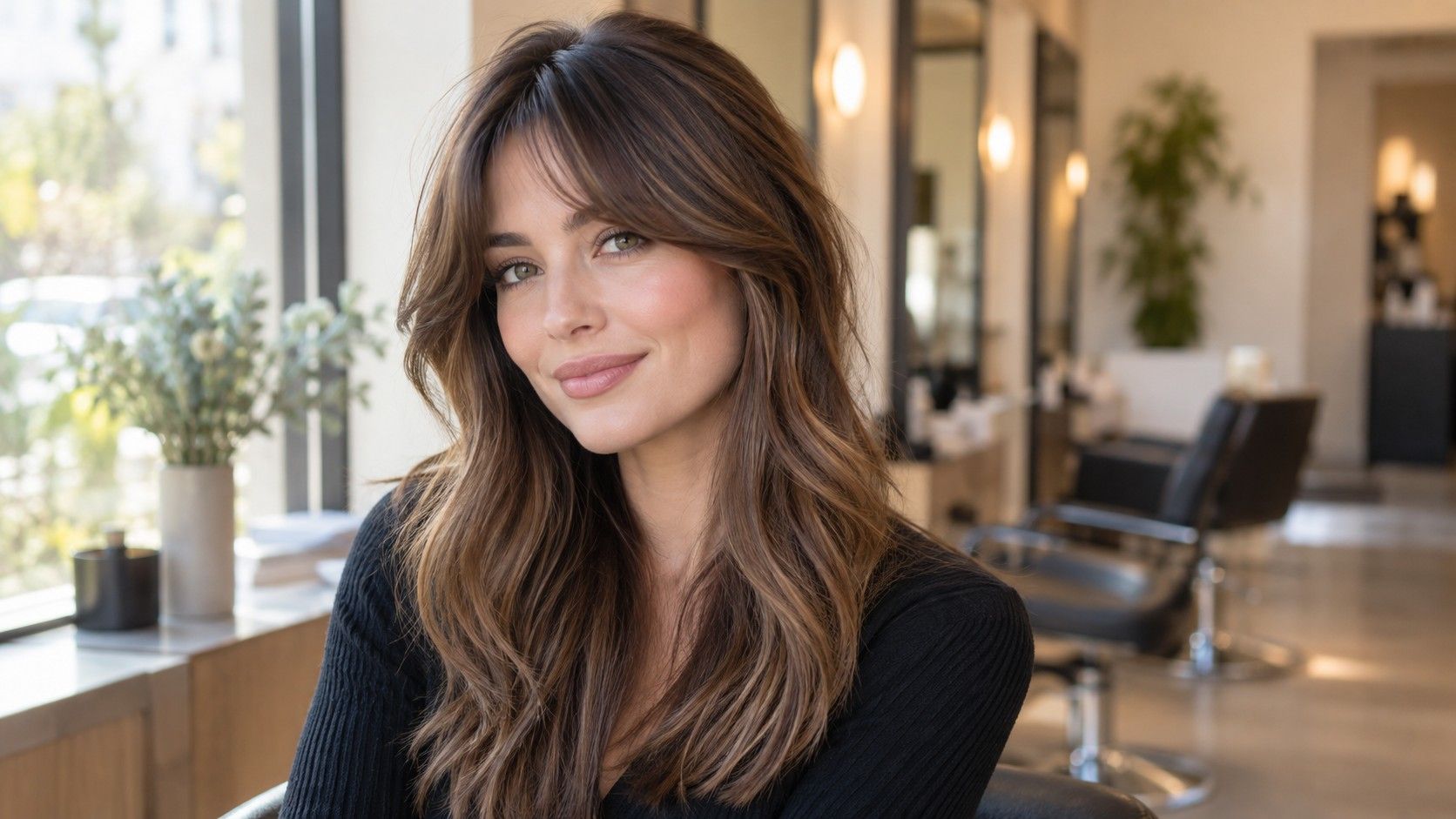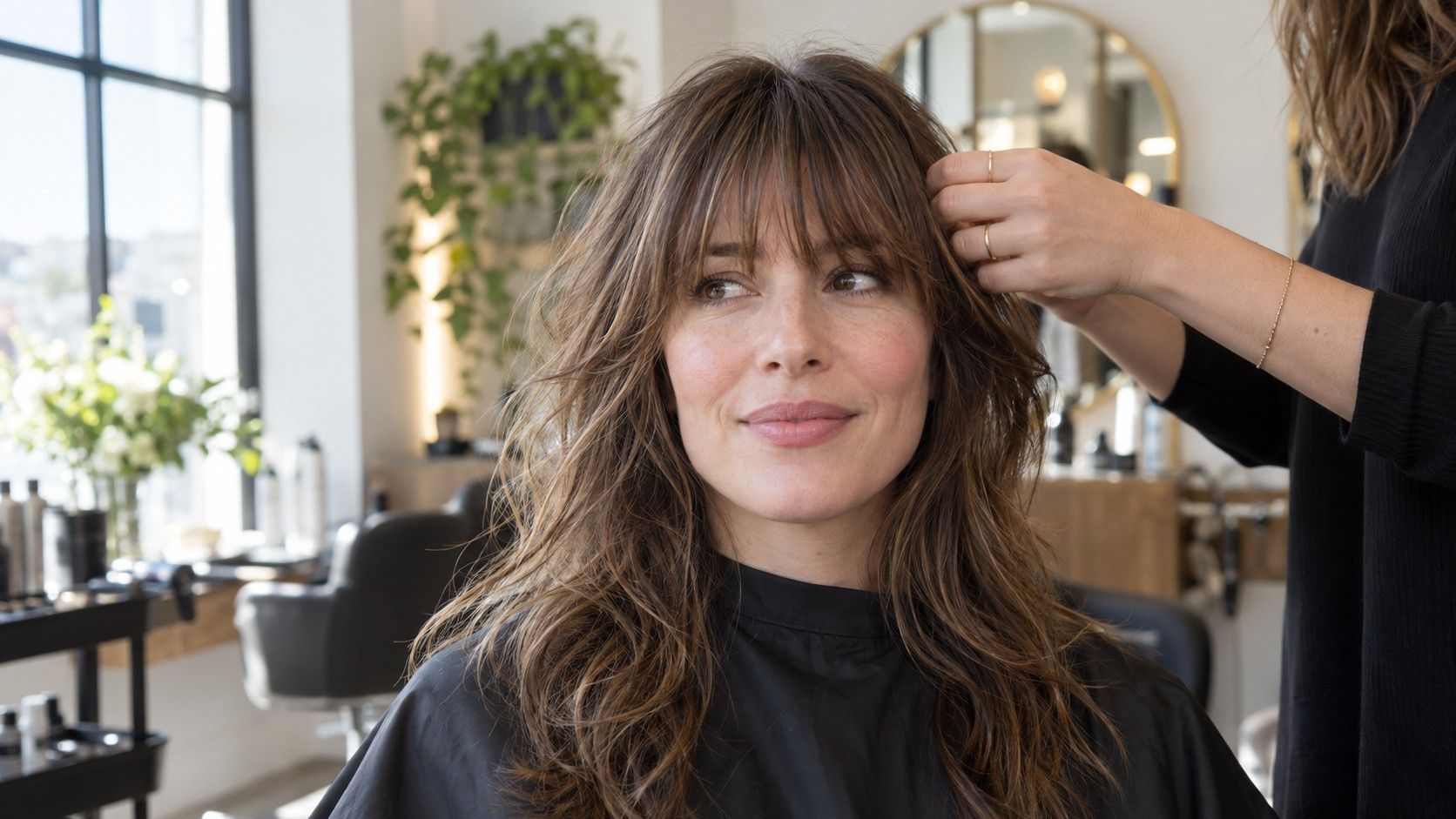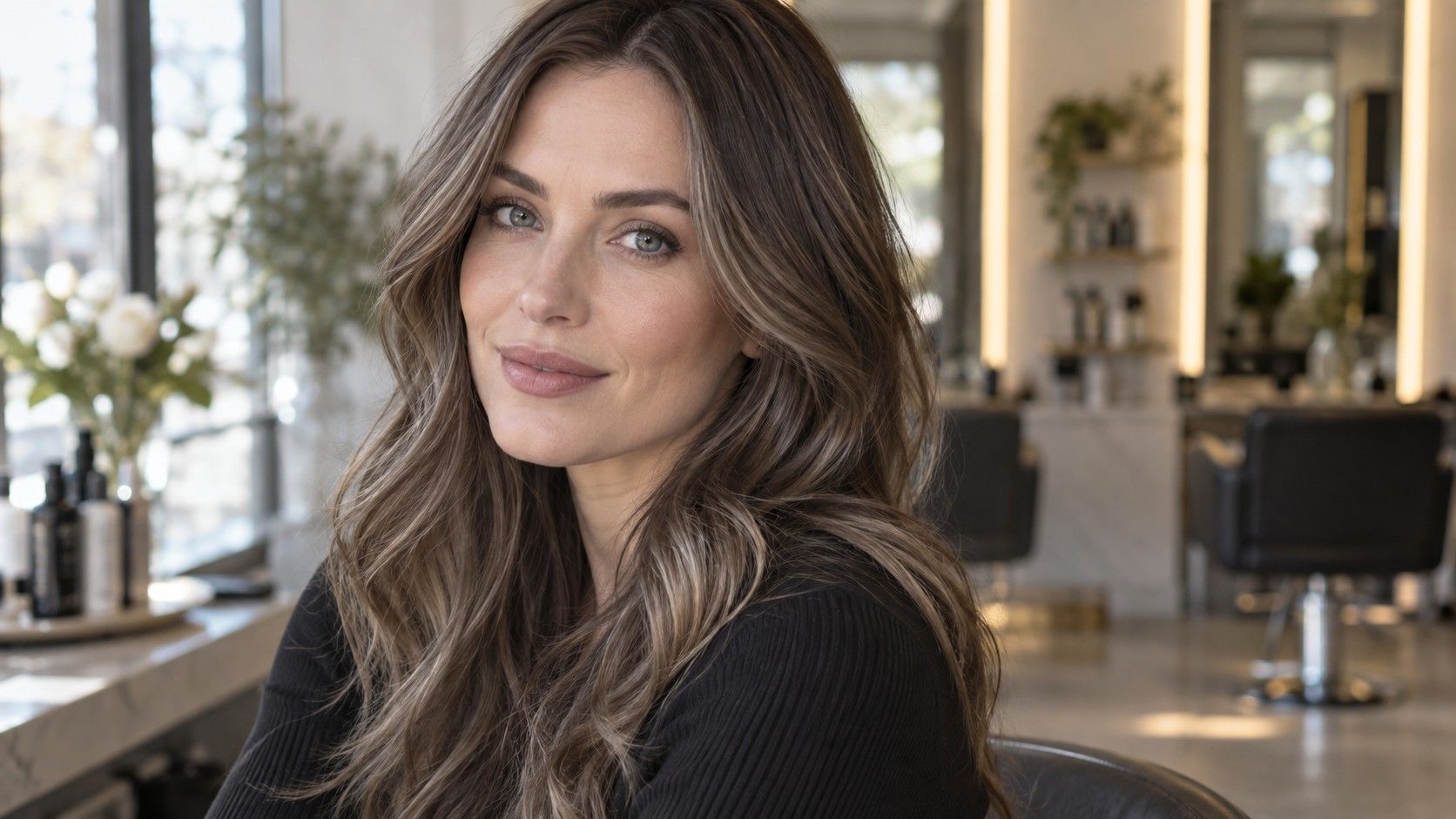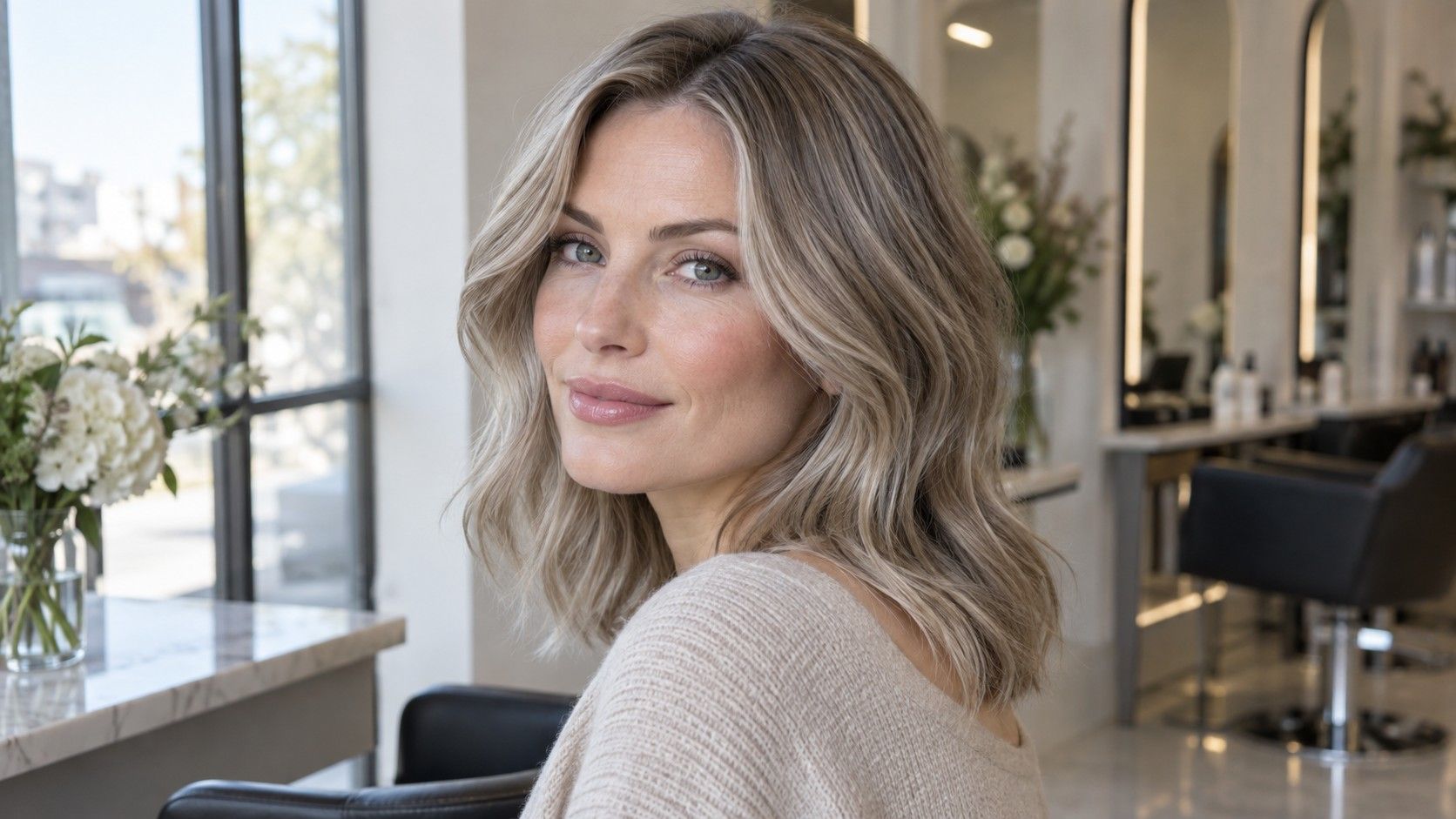
A cool summer hair color should look quiet before it looks clever: the sort of shade that still makes sense beside a grey T-shirt, in a car mirror, and after three washes. The difficult part is not finding an ash label on a swatch ring; it is keeping the result soft enough to have movement instead of the flat, dusty cast that makes many people give up on cool color altogether.
Start with softness, not the coolest swatch
Ask to compare two neighboring levels at the window, not under the salon’s blue-white ceiling. A medium mushroom brown or cool beige often reads more alive than an aggressively silver brown, especially when the natural root is neither very dark nor very pale.
The useful test is whether the color still lets the face show through. If the first impression is a grey veil over the hair, the formula has probably gone too matte; a faint neutral note or a little depth at the root is usually more forgiving.
Bring photos taken in daylight and say which part you like: the muted shine, the low contrast, or the depth around the parting. A single screenshot rarely tells a colorist how much lift, gloss, or old warmth is hiding underneath.
Choose blonde that moves when you move
For a blonde direction, ash beige and pearl-beige ribbons tend to be easier to live with than a solid icy sheet. Fine highlights around the hairline can brighten the face while the interior remains a shade deeper, so the color has somewhere to go when the hair is tucked behind an ear.
Watch the contrast between the root and the lightest pieces. A root melt that is only one or two levels deeper keeps the grow-out calm; a dramatic shadow can make soft coloring feel like a deliberate dark-root trend instead.
This is the moment to discuss the previous color history honestly. Old gold balayage, mineral-heavy water, and a box-dye band do not disappear because the inspiration photo is cool. A staged lightening appointment is less glamorous, but it prevents brittle ends and a toner that turns muddy.
Keep brunette shades light enough to breathe
Cool brunette does not need to mean near-black. Mushroom brown, smoky taupe brown, and a muted cocoa base can give depth without closing in the features. I prefer seeing a little tonal separation at the crown and ends rather than one opaque brown from scalp to hemline.
Ask your stylist to show the difference between a gloss and permanent color for your base. A gloss is often the sensible first move when the goal is to cool down orange or red reflection without committing to a hard regrowth line.
The caveat is outdoor light. A brown that looks perfectly calm in a salon can flash khaki or green in strong sun when too much warmth has been cancelled. Leaving a restrained beige undertone is not a compromise; it is what keeps the shade looking like hair.
Treat toner as a maintenance appointment, not a rescue
Toner matters because cool summer hair color is mostly about reflection. Shampoo, heat, swimming, and even a few weeks of sun change that reflection long before the haircut needs attention, so the fresh-salon version is not a permanent finish.
A clear gloss or gentle beige-violet toner is usually more useful than repeatedly reaching for the strongest purple shampoo. Overusing pigment at home can make porous ends look dull while newer growth remains warm, which creates two different colors rather than a balanced one.
Set a simple check-in rule: look at the hair near a window every couple of weeks, then book a gloss when it begins to look brassy rather than waiting for the whole result to feel wrong. That rhythm is cheaper and kinder to the lengths than another full correction.
A quick comparison before you commit
| Result you want | A practical direction | What to watch |
|---|---|---|
| A brighter face | Fine ash-beige highlights | Keep the root only softly deeper |
| A quieter brunette | Mushroom or taupe gloss | Avoid green-grey ends |
| A gentler grow-out | Neutral-cool root melt | Do not create a stark shadow |
Make the decision easier before the appointment
Save two or three images that show the same idea on different days, then add one unfiltered picture of your own seasonal color situation. Write down what you want to avoid as clearly as what you want to gain: too much upkeep, a harsh line, obvious fading, a shape that needs heat every morning, or a result that feels unlike your usual self. That small preparation gives the consultation something real to work with.
It also helps to describe the last result that disappointed you. Was the problem the first week, the third wash, the regrowth, the way it sat at the side, or the extra time it asked of you? A stylist can adjust placement, texture, tone, weight, or finish when they know the actual failure point. Without that detail, people often repeat the same choice with a new name and are surprised by the same outcome.
Give yourself permission to choose the quieter version first. A cool summer hair color ideas direction can be strengthened later with another gloss, more contrast, a shorter line, or a slightly fuller front; undoing a too-dark color, too-short fringe, or over-lightened length is slower. The best plan leaves a little room for the hair to answer back after you have lived with it for a week.
Check the result in ordinary light
Before you leave, step close to a window if the salon has one, take a front and side photo, and move the hair the way you normally do. Look at the parting, hairline, ends, and the places that touch your glasses, collar, or cheeks. Fresh blow-drying can hide a heavy line, a pale stripe, or a fringe that sits too high; a quick reality check makes a small adjustment possible while the appointment is still in progress.
Then let the result settle before judging it. Wash and style it in your own bathroom, using your usual products and no heroic effort. If a detail still bothers you, describe that specific detail when you return rather than saying the whole thing feels wrong. Clear observations—one side lifts, the root looks warmer, the ends flip, the center falls in the eyes—are how a promising first choice becomes a dependable one.
The table is a starting point, not a verdict. Take it to the appointment together with two daylight photos of your own hair, explain what you do on a busy morning, and leave room for the stylist to adjust the plan to the hair that is actually in front of them. The most convincing result is usually the one that still feels like yours when the novelty wears off.