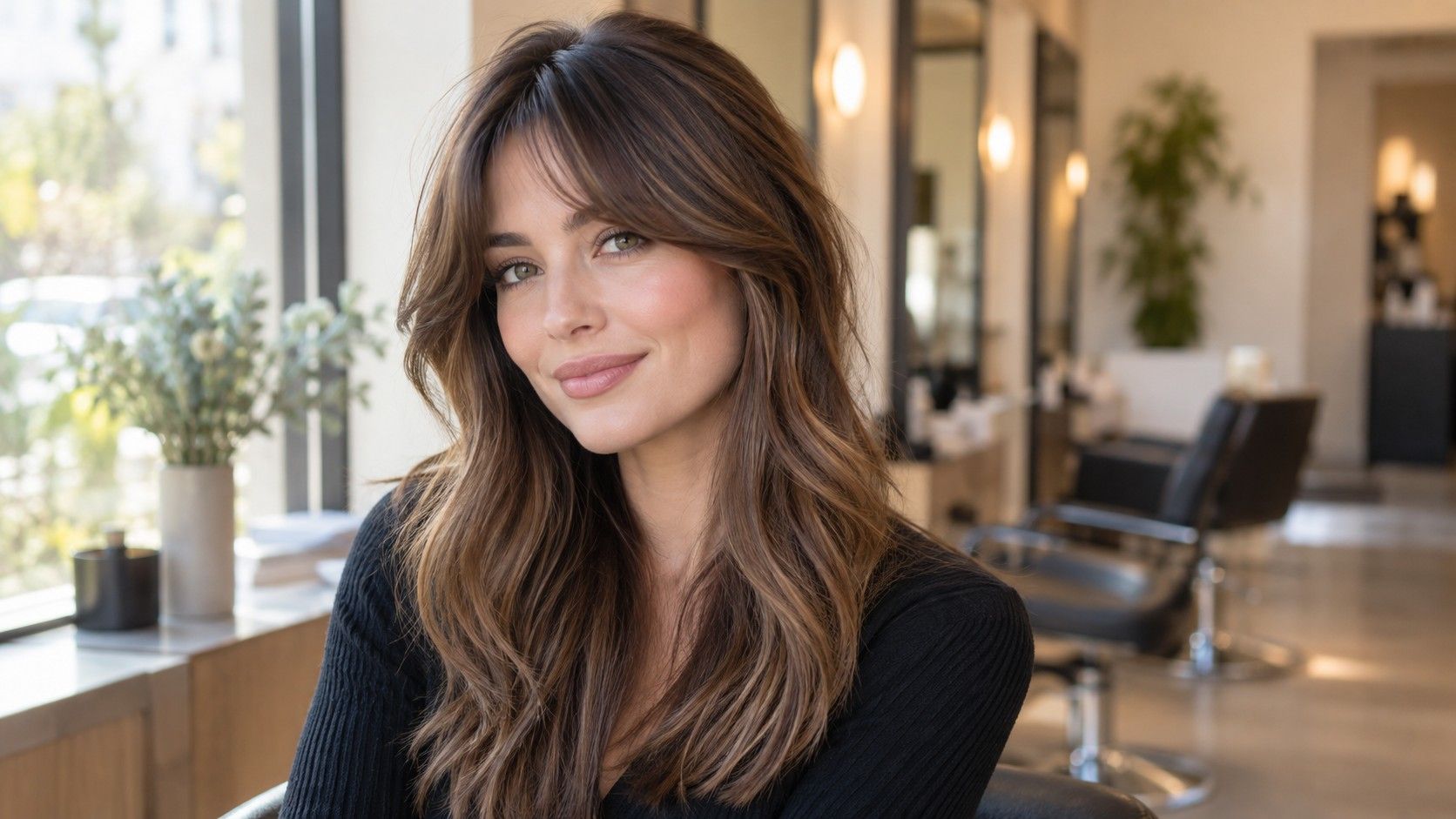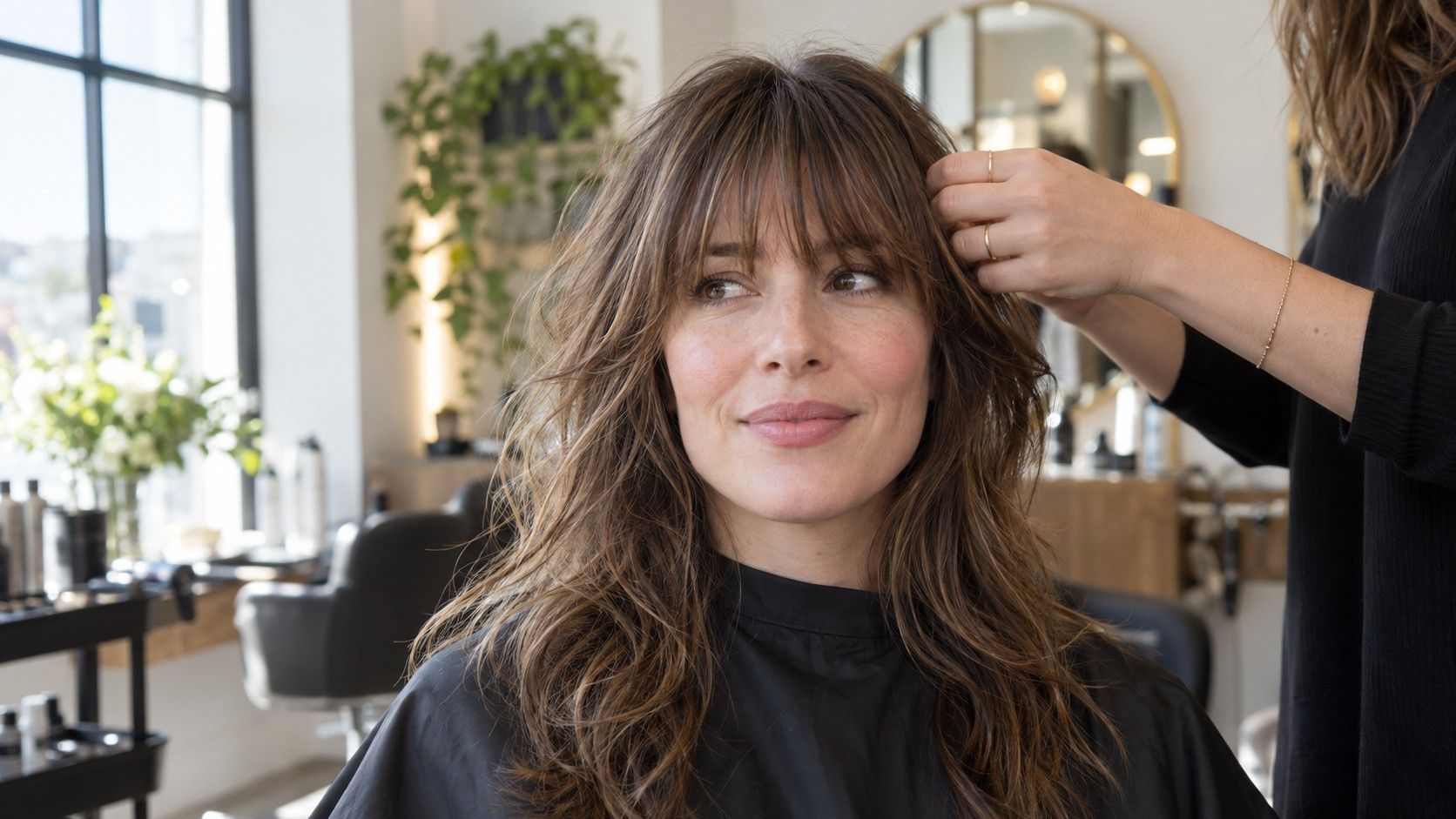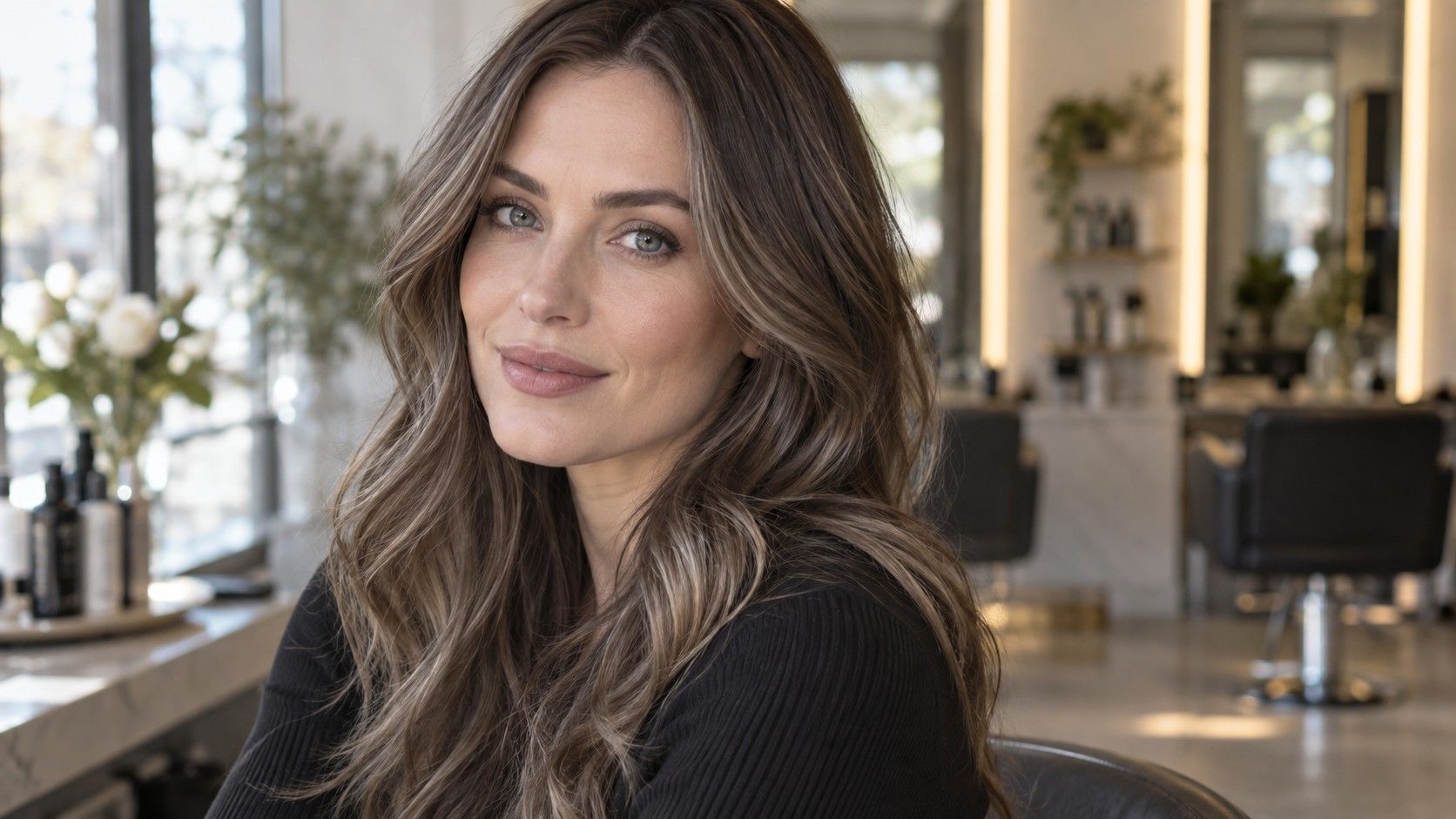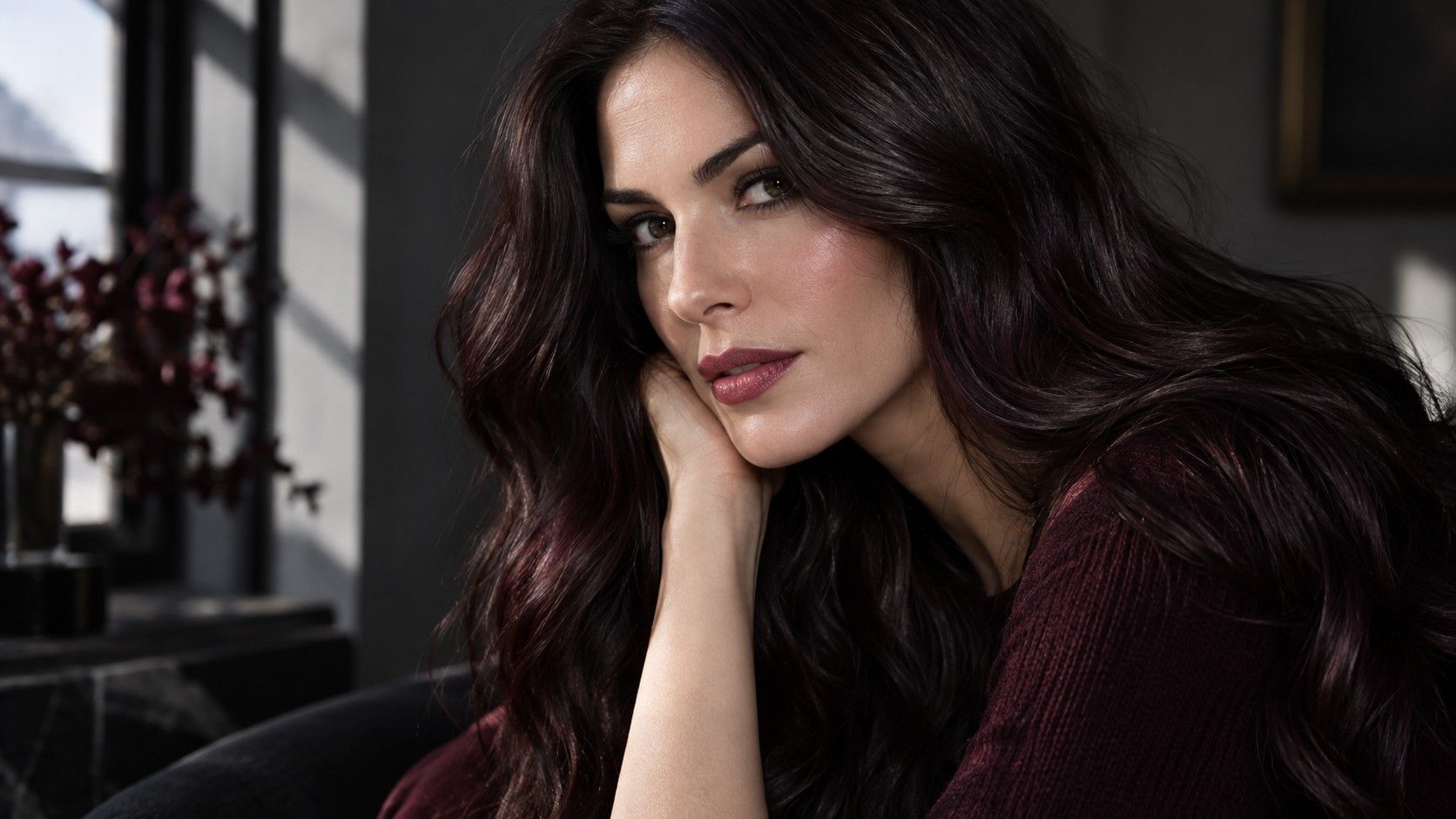
Deep winter hair colors are often sold as a command to go darker, blacker, and more dramatic. That can work, but the salon chair is a poor place for a costume decision. The more useful question is where you want contrast to live: in the base, around the face, in a glossy finish, or simply in the way your hair looks against your everyday clothes.
Decide how much contrast you can actually wear
High contrast is not one shade on a color chart. It is the distance between the base and the skin, brows, eyes, and even the frames you put on each morning. An espresso brown can look sharper than black on someone whose natural root already has visible brown reflection.
Before choosing a formula, take a daylight photo with your hair pulled back and another with it down. Notice whether the face gets clearer with depth or whether the hair becomes the only thing you see; that small comparison is more useful than a label.
A gloss is a sensible trial run. It makes a dark direction read polished for several weeks without the long commitment of permanent black, and it lets you see whether the contrast suits your ordinary Monday rather than only the salon mirror.
Use espresso for dark depth with room to move
Espresso is often the better alternative to a flat dark brown because it can carry cool depth while retaining tiny brown reflections at the ends. Ask for dimension through fine lowlights or a sheer glaze rather than bold caramel ribbons, which can pull the look warmer than intended.
Look closely at the hairline and parting. A solid permanent base often creates a hard line there first, while an all-over gloss or demi-permanent color usually grows out with less drama. This matters if you wear your hair up or change your part often.
If old highlights are very porous, they may grab cool pigment faster than the rest of the head. A colorist can prefill or treat those areas differently; skipping that conversation is how a rich espresso becomes charcoal patches by the second wash.
Try black without the costume effect
Blue black can be striking when it has shine and movement, but matte black is unforgiving in a different way: it makes dry ends obvious and can look like a helmet in photographs. The best hair colors for deep winter are not automatically the darkest available shades.
Ask to see a black-blue gloss beside a neutral black and a very dark espresso. Under direct light, the blue reflection should be a small cool glint, not a navy stripe. In normal indoor light it should still read as believable hair.
Maintenance is the hidden price. Dark pigment can stain towels, fade unevenly over lifted ends, and make a later return to blonde a serious project. If you are curious but unsure, a temporary gloss is an intelligent experiment rather than a timid one.
Use red and burgundy as controlled color
Burgundy, black cherry, and deep wine tones offer contrast without making every outfit compete with jet black hair. They work best when the underlying brown remains visible in low light; otherwise the color can become a solid theatrical block.
The practical check is fading. Red molecules leave first, particularly around the face and on heat-styled ends, so ask what the in-between shade will look like. A cool berry gloss that fades to a wearable brunette is easier to maintain than one that exposes a copper base.
Keep the rest of the cut simple while testing a red direction. A familiar part, your usual makeup, and a normal workday photo tell you more than a freshly curled salon finish. If it still feels right then, you have a color worth repeating.
A quick comparison before you commit
| Direction | Best use | Practical caution |
|---|---|---|
| Espresso | Depth with softer regrowth | Porous highlights can grab too cool |
| Blue black | Maximum glossy contrast | Harder to lighten later |
| Deep burgundy | Color with visible dimension | Fades fastest at the ends |
Make the decision easier before the appointment
Save two or three images that show the same idea on different days, then add one unfiltered picture of your own seasonal color situation. Write down what you want to avoid as clearly as what you want to gain: too much upkeep, a harsh line, obvious fading, a shape that needs heat every morning, or a result that feels unlike your usual self. That small preparation gives the consultation something real to work with.
It also helps to describe the last result that disappointed you. Was the problem the first week, the third wash, the regrowth, the way it sat at the side, or the extra time it asked of you? A stylist can adjust placement, texture, tone, weight, or finish when they know the actual failure point. Without that detail, people often repeat the same choice with a new name and are surprised by the same outcome.
Give yourself permission to choose the quieter version first. A deep winter hair colors direction can be strengthened later with another gloss, more contrast, a shorter line, or a slightly fuller front; undoing a too-dark color, too-short fringe, or over-lightened length is slower. The best plan leaves a little room for the hair to answer back after you have lived with it for a week.
Check the result in ordinary light
Before you leave, step close to a window if the salon has one, take a front and side photo, and move the hair the way you normally do. Look at the parting, hairline, ends, and the places that touch your glasses, collar, or cheeks. Fresh blow-drying can hide a heavy line, a pale stripe, or a fringe that sits too high; a quick reality check makes a small adjustment possible while the appointment is still in progress.
Then let the result settle before judging it. Wash and style it in your own bathroom, using your usual products and no heroic effort. If a detail still bothers you, describe that specific detail when you return rather than saying the whole thing feels wrong. Clear observations—one side lifts, the root looks warmer, the ends flip, the center falls in the eyes—are how a promising first choice becomes a dependable one.
The table is a starting point, not a verdict. Take it to the appointment together with two daylight photos of your own hair, explain what you do on a busy morning, and leave room for the stylist to adjust the plan to the hair that is actually in front of them. The most convincing result is usually the one that still feels like yours when the novelty wears off.