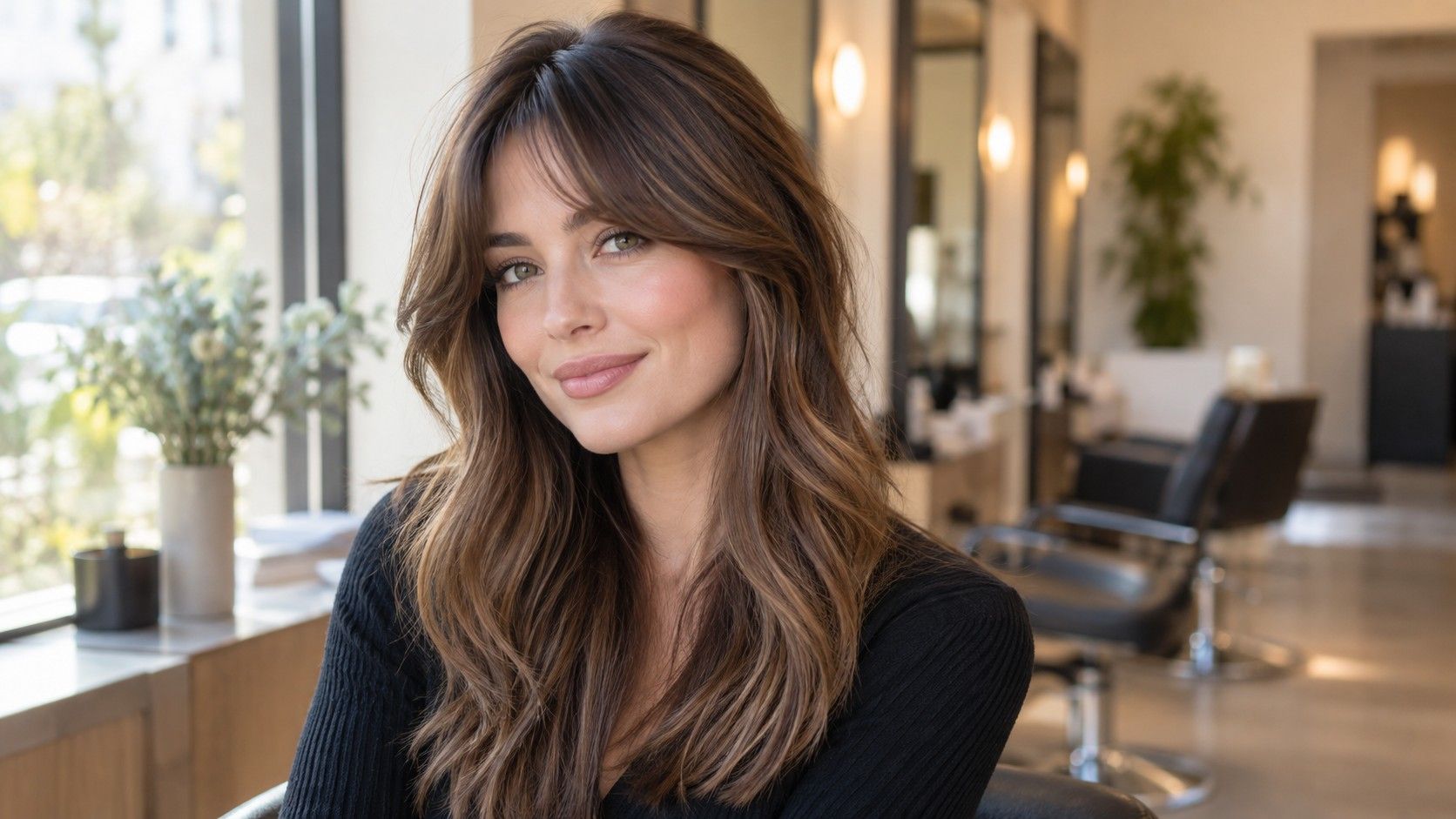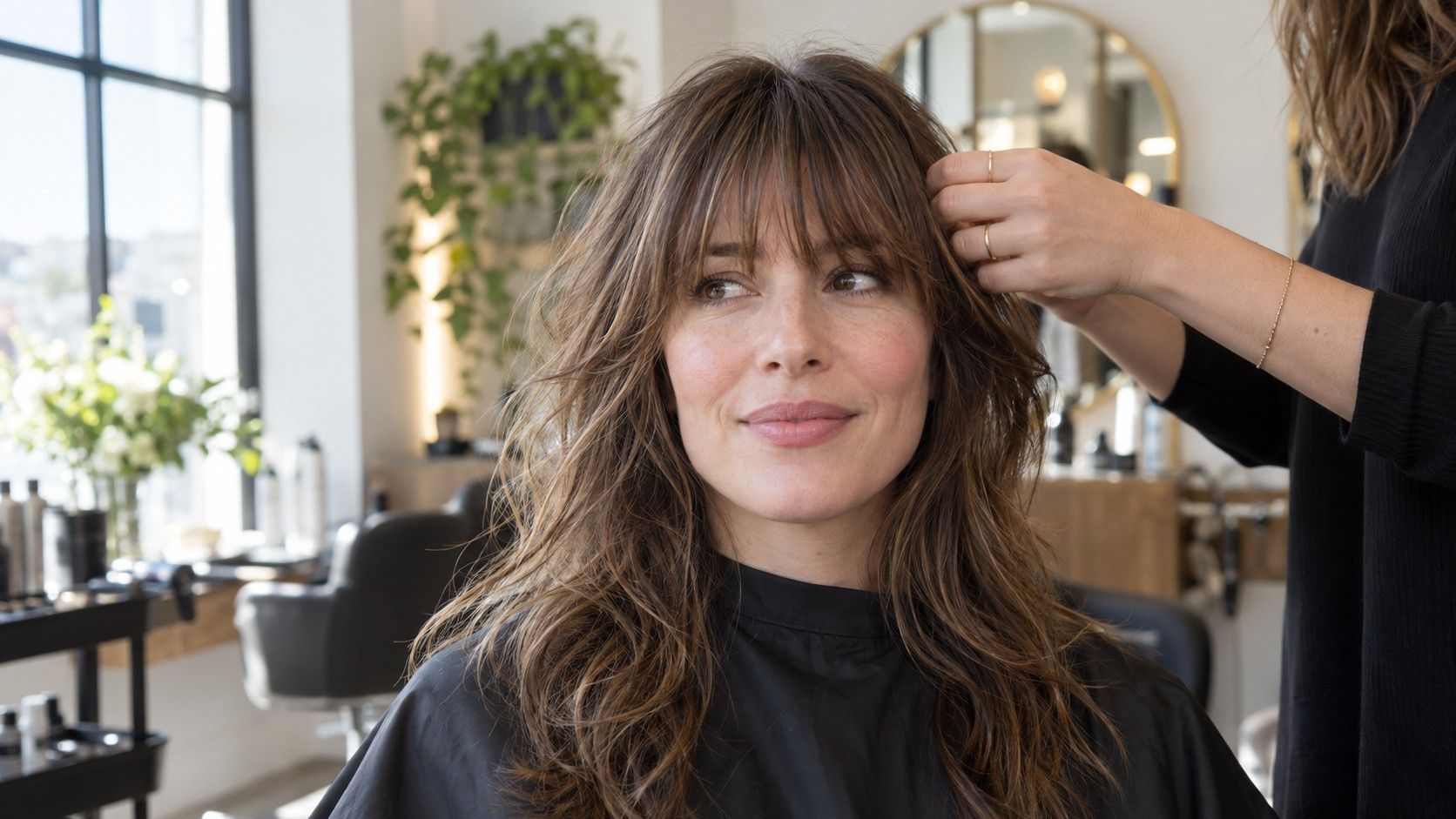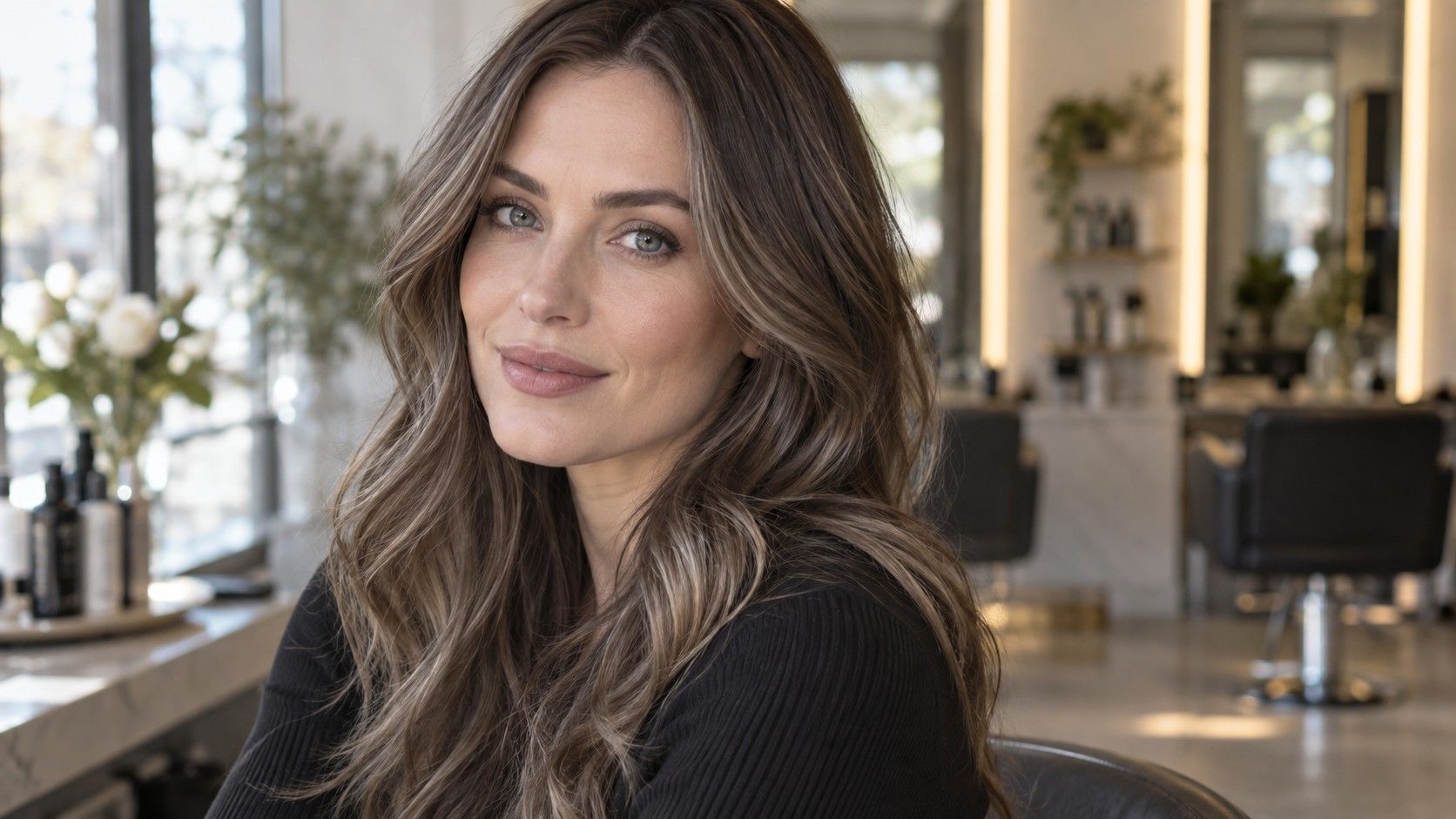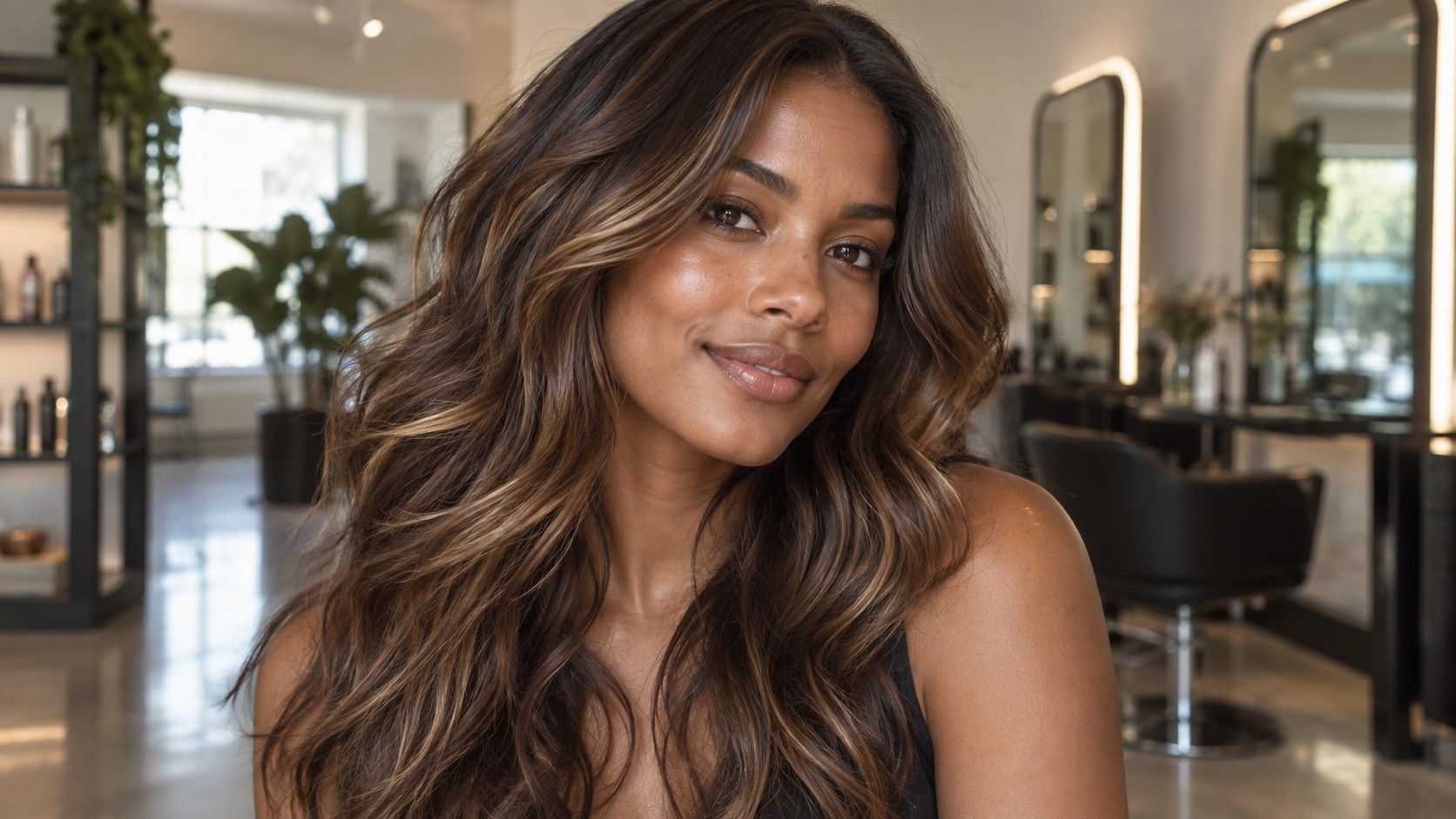
Hair colour advice for brown skin becomes unhelpful the moment it treats brown skin as one surface with one undertone. Skin can be deep, medium-deep, golden, olive, red-leaning, or cool, and it changes again under sun and indoor light. A useful brown skin hair color decision begins with the face you see every day: your brow depth, natural root, lip colour, and how much contrast feels like you rather than a temporary costume.
Start with skin depth and undertone, but keep the mirror in charge
Look at several shades against your face in daylight. Caramel can look luminous on one person and almost yellow on another with a similar skin depth. Burgundy may make a cooler or red-leaning complexion look polished, while on warm golden skin it can feel too blue unless there is a little warmth through the mids. The point is not to assign a permanent label; it is to notice which colours make the skin look even rather than bringing forward shadows around the mouth or eyes.
Your natural root is a practical clue. If it is very dark, a high-lift blonde starts with a strong contrast and a serious maintenance schedule. If you want lightness without that commitment, ask for caramel or honey placed over a deep root. The dark root remains believable, and the light is concentrated where it changes the face rather than scattered everywhere.
Choose contrast at the hairline before choosing a full-head shade
Face-framing highlights do more visual work than most people expect. A warm brunette with two caramel pieces beside the temples can look brighter than an all-over lighter colour, while still allowing the brows and eyes to lead. Place the lightness too close to the scalp in thick, coily, or textured hair and the regrowth line may be the first thing you notice. A soft melt from root to cheekbone is usually easier to wear.
For a more dramatic look, the contrast should be repeated somewhere else: a deeper brow, a defined lash line, or a strong natural lip colour. Otherwise very pale money pieces can look detached from the rest of the face. I would ask the stylist to show the placement with clips before processing. It is easier to move a foil than to correct a bright stripe once it is toned.
| Goal | Colour direction | Maintenance reality |
|---|---|---|
| Subtle brightness | Caramel or honey face frame | Gloss as warmth fades |
| Richer natural effect | Warm brunette with tonal ribbons | Low; root grows softly |
| Visible red change | Burgundy, cherry, or cinnamon | Regular refresh to prevent fading |
| High-impact lightness | Honey blonde or golden beige | Lift, tone, and careful conditioning |
Warm brunette is often the most forgiving place to begin
Warm brunette does not mean a single red-brown box dye. It can be espresso softened with cinnamon through the ends, dark chocolate with a few amber strands, or medium brown with a luminous glaze. This family is useful when you want shine and movement but do not want the root line of blonde. It also tends to photograph naturally in both cool daylight and warm restaurant lighting.
Ask how much of the warmth comes from the base versus the gloss. A gloss is a gentle way to test chestnut or cinnamon without locking into a permanent shift. If your hair has old black dye or uneven lightened ends, be honest about it. Those histories determine whether a warm brunette will look rich or grab too dark and red in patches.
Decide between warm and cool red with a wear test
Red is where generic rules fail most visibly. Warm reds such as copper-brown, cinnamon, and mahogany bring golden light to the face. Cooler reds such as wine, plum, and burgundy can create elegant contrast, particularly beside dark eyes and neutral-to-cool skin. Neither is automatically better. Try a coloured scarf or a temporary wig close to the hairline, then step outside; if the skin looks grey or suddenly very red, the family may need adjusting.
Fading should be part of the decision, not a footnote. Burgundy that fades toward pink can be attractive, while copper that fades toward brassy orange may be frustrating if you wear cool makeup. Discuss a depositing conditioner, wash frequency, and what the colourist expects after six weeks. The best hair color for brown skin is allowed to be vivid, but it should be vivid on a schedule you can maintain.
Plan maintenance around regrowth and hair health
Lightening dark hair can be done carefully, but the route matters. A gradual series of highlights preserves more flexibility than one aggressive attempt to reach pale blonde. On curls and coils, the condition of the curl pattern after lightening deserves as much attention as the shade itself. A strand test and a clear plan for bond care are sensible safeguards, not signs that the appointment is failing.
Think about your actual routine: swimming, heat styling, protective styles, frequent washing, or long gaps between appointments. A lived-in blend may suit a busy calendar; a crisp blonded hairline needs more regular toner. The most successful colour is not the one that gets the biggest reaction on day one. It is the one that still frames your skin well when the root grows in and the salon shine has gone.
Bring a clear conversation to the consultation
Bring photos with people who share your approximate skin depth and natural hair density, but use them as a map rather than a demand for an identical result. Point out whether you are responding to the root, the face frame, or the warmth in the ends. Include a picture of a shade you disliked; “too orange,” “too ashy,” or “too stripey” gives a colourist something concrete to avoid.
Before leaving, view the result in daylight and ask what it will look like at the next refresh. A thoughtful brown skin best hair color choice has a beginning, a fade pattern, and a regrowth plan. That is more valuable than a flattering name on a colour chart.
Judge the result after the salon lights are gone
Give yourself a week before deciding that a new shade is either perfect or a mistake. Fresh styling, a gloss, and the shock of seeing a change all make the first evening an unreliable judge. Wash and style it as you normally do, wear it to work, and check it in morning and late-afternoon light. If the colour still makes the complexion look even without special makeup, the decision has a much better chance of lasting.