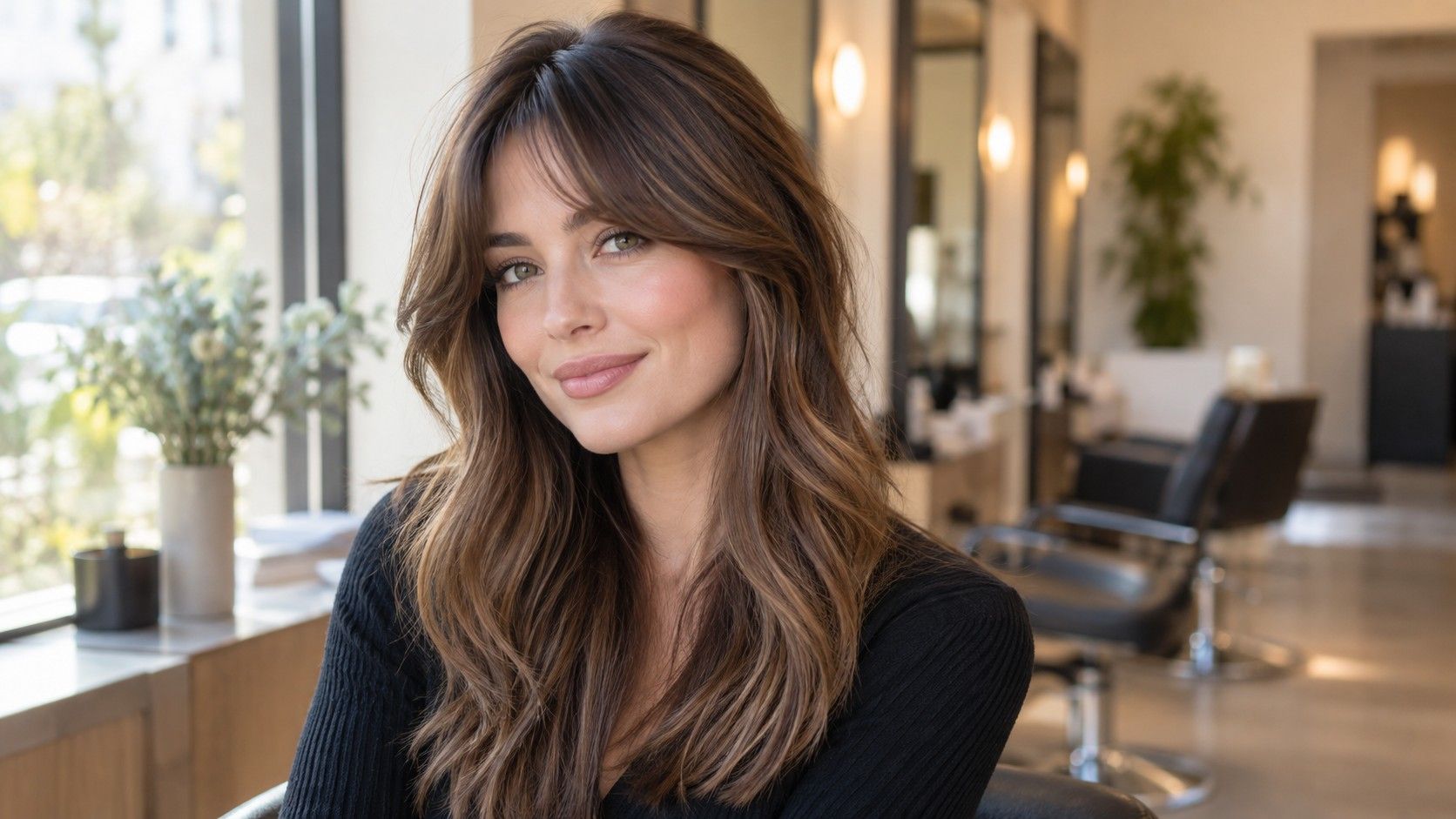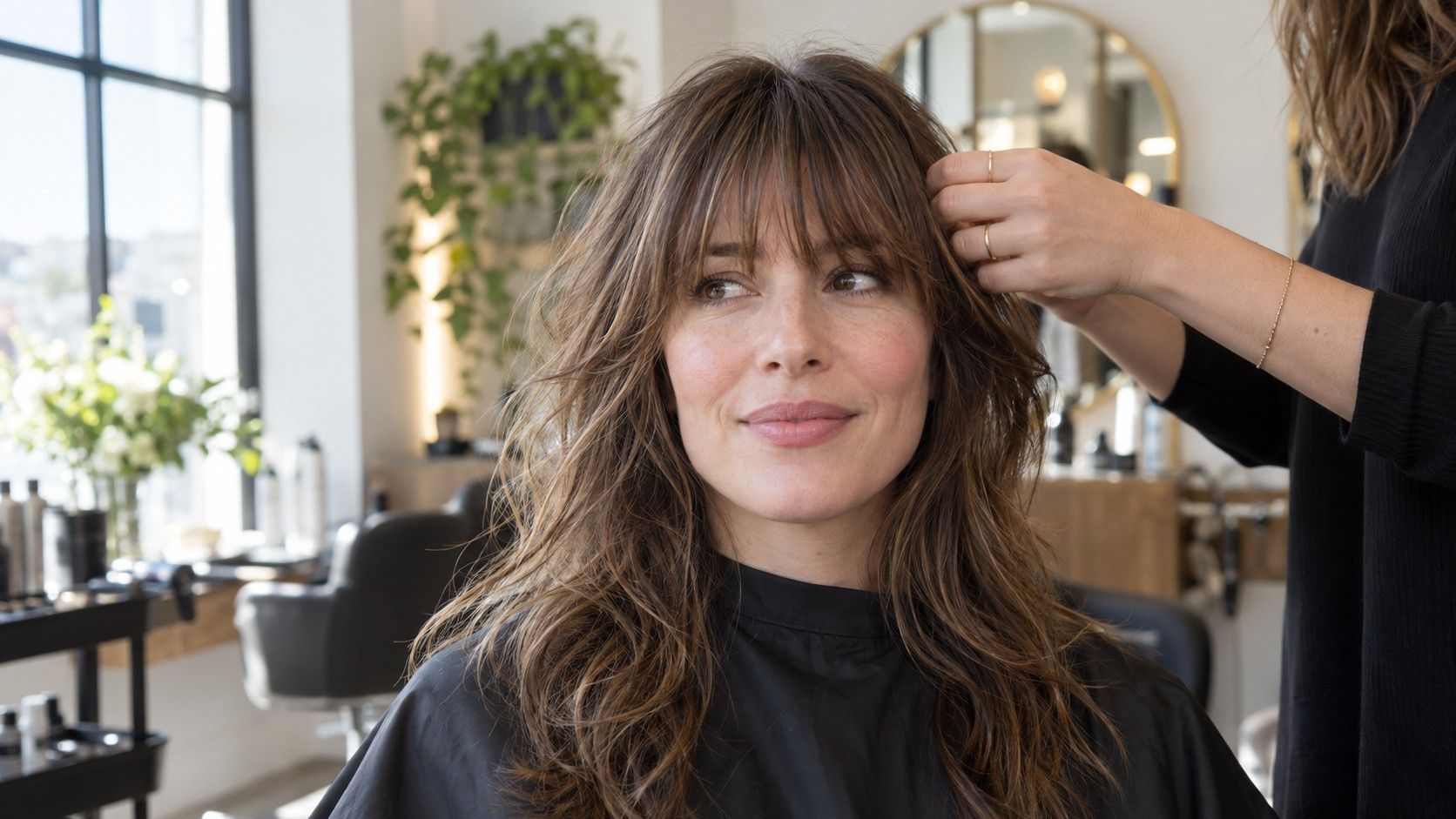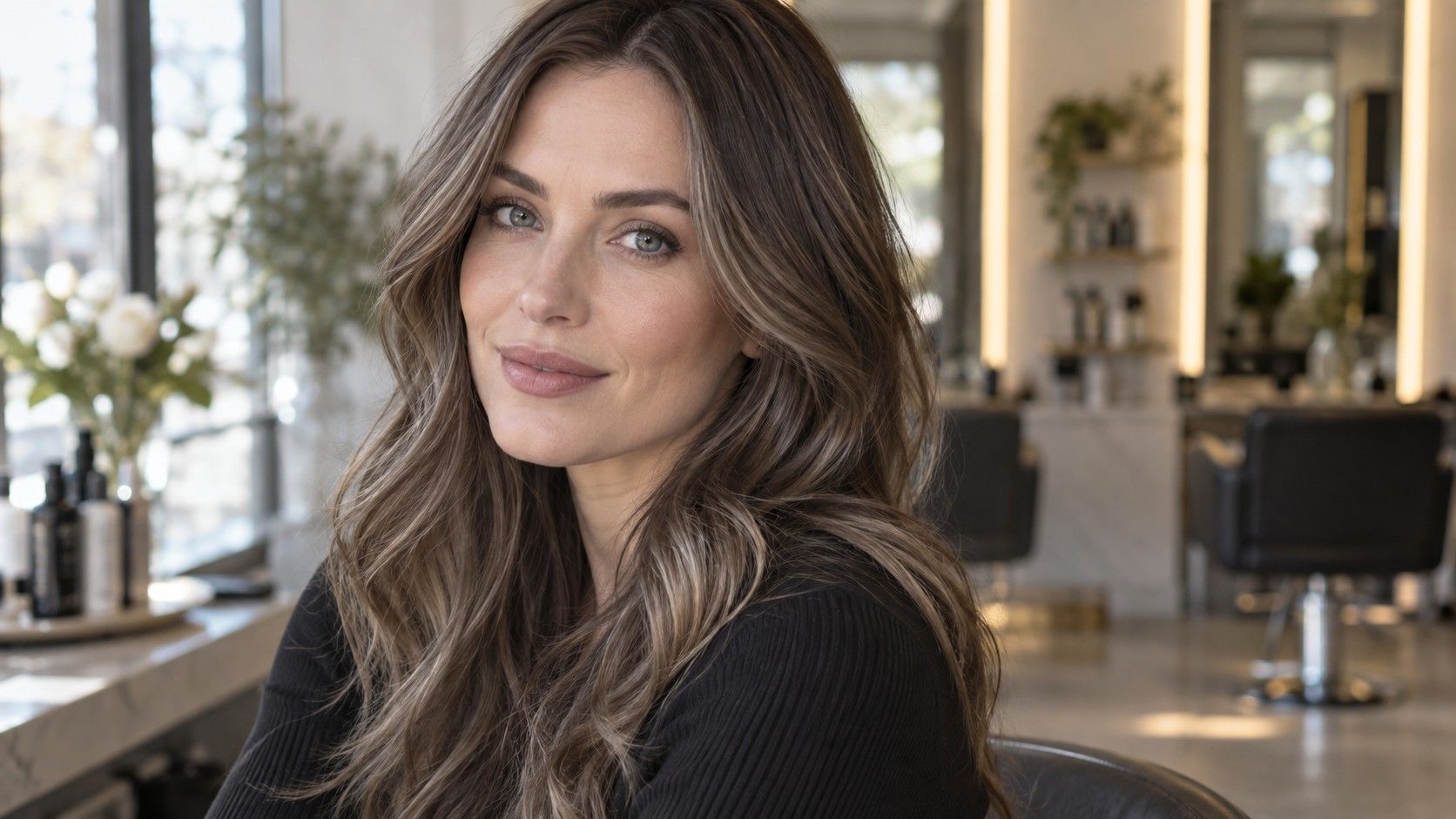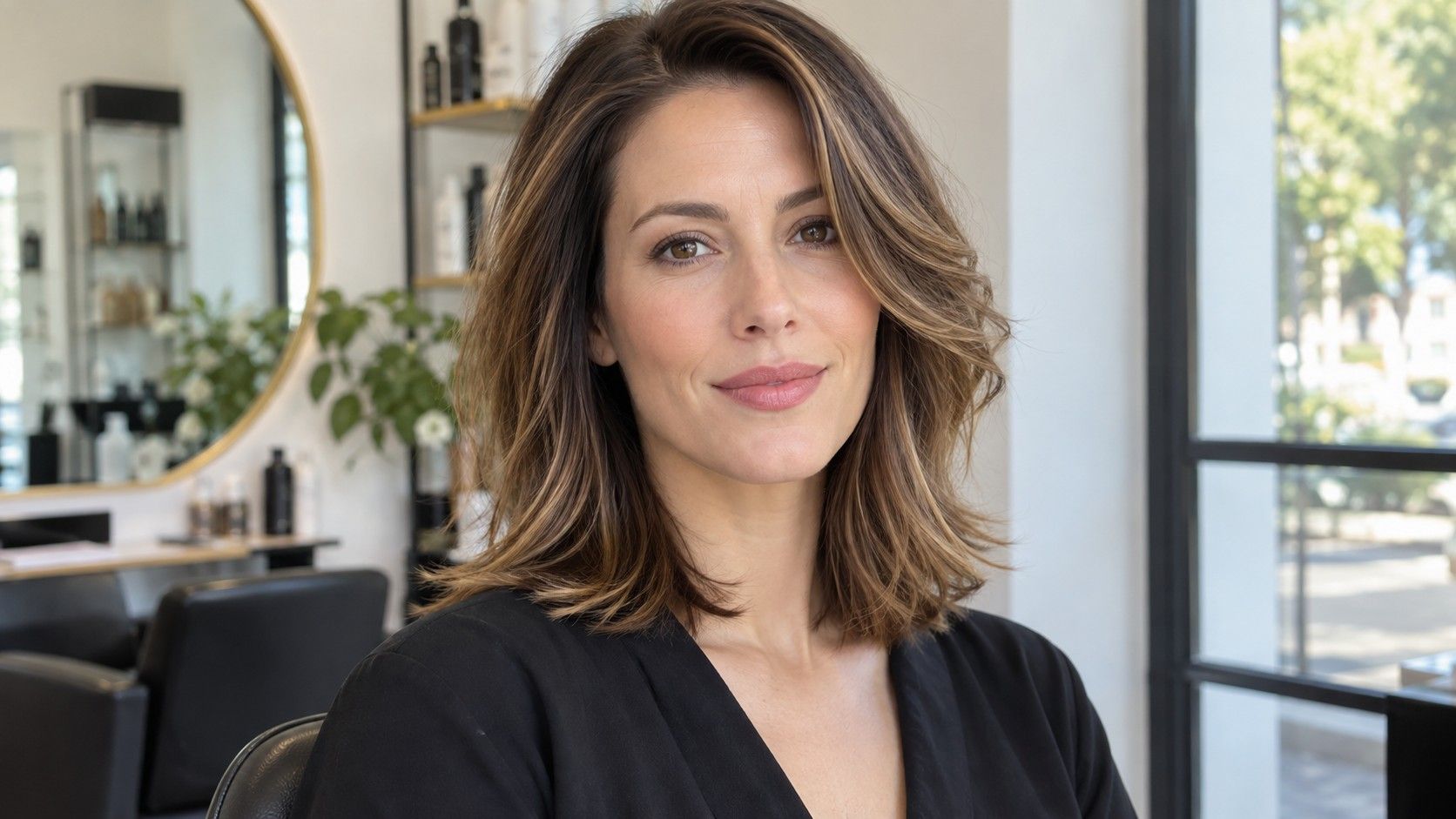
An oblong face is often described as longer than it is wide, but that description is only a starting point. Hair density, a long neck, a high forehead, glasses, and the way you style your part can change what a haircut looks like in real life. The most helpful cuts usually create considered width at the sides instead of adding height at the crown by habit.
Check whether oblong is the useful starting point
Face-shape advice becomes unhelpful when it sounds like a diagnosis. Take a front-facing photo in even daylight with hair pulled back, then compare the forehead, cheekbones, jaw, and overall length. You may have an oblong outline with a rounded jaw, a rectangular outline with strong corners, or simply a longer face that already has plenty of width through the cheeks. None of those requires a corrective haircut.
Use the photo to notice proportions you want to emphasise. If your eyes and cheekbones are your favourite features, face-framing layers or a fringe can guide attention there. If you prefer an open forehead and wear a centre part, you may want a cut that creates width lower down rather than adding bangs. A good haircut for an oblong face is a choice about silhouette, not a rule about what must be hidden.
Bring your normal styling habits into the decision. A cut that depends on broad, brushed-out waves will not give the same result if you usually tie your hair back or let it dry untouched. Your stylist needs to know whether you use heat, how often you wash, and whether the crown falls flat by afternoon.
Lengths that add visual width
Width is usually created by where hair expands, not by simply cutting it shorter. A chin-length bob, a collarbone lob with texture, or medium layers that begin around the cheekbones can make the sides feel more present. Long hair can work beautifully too, especially when it has movement around the face, but pin-straight lengths with all the volume at the crown can exaggerate vertical lines.
For a haircut oblong face women can actually live with, watch the weight line. A blunt line at the jaw or collarbone gives a clear horizontal reference. Soft waves around that line create width without looking boxy. If your hair is very thick, a stylist may remove some internal bulk while retaining a substantial perimeter; if it is fine, too many short layers can make the ends look sparse.
Try moving your part before committing to a cut. A deep side part gives lift at one temple and a diagonal line across the forehead. A centred part can look calm and modern, but it may place more emphasis on length unless the haircut has side volume. There is no forbidden parting; it is a styling lever worth testing in the chair.
| Cut direction | What it can create | Watch for |
|---|---|---|
| Chin-length bob | A strong width point near the jaw | May flip out if the nape is too short |
| Collarbone lob | Flexible width with easy tying back | Needs texture to avoid a narrow triangle |
| Medium layers | Movement around cheeks and temples | Too many layers can thin fine ends |
| Long hair with fringe | Softens the upper third while retaining length | Fringe requires routine trims |
Bobs and lobs in the salon chair
A bob haircut for an oblong face is often most useful when the shape has enough body at the sides. A French-style bob, a softly rounded jaw-length bob, or a collarbone lob can all do that, but the details differ. A sharp, one-length bob is easier to style on naturally straight, medium-density hair. On hair that expands in humidity, a slightly softer outline may be more forgiving.
Ask where the longest front point will sit when your hair is dry. A length that lands directly at the narrowest part of the jaw can draw a clean line there; a little above or below shifts the visual emphasis. This is why photos of the same bob can look radically different on different people. Neck length and shoulder width are part of the silhouette too.
If you want to retain ponytail options, say so before the first section is cut. A lob generally offers that flexibility, while a short bob does not. It is also sensible to ask how the cut looks without a round-brush blowout. A good stylist can show the shape air-dried or roughly diffused, not only in its most polished state.
Use fringe as a proportion tool, not a requirement
Bangs can break up the upper third of a longer face, but they are not compulsory. A soft curtain fringe adds side movement and leaves an opening at the centre. A fuller brow-length fringe makes a more obvious horizontal line. Both can work; the right choice depends on hairline, density, and whether you enjoy styling the front section most mornings.
A fringe that is too thin can split and disappear, while one taken from too far back can remove needed volume from the sides. Ask the stylist to map the section and leave it longer initially. Fine hair often benefits from a compact, textured fringe. Wavy hair needs a dry check, because the true length may appear only after the wave settles.
For people who wear glasses, the distance between fringe and frames matters. A heavy fringe grazing thick frames can make the eye area busy; longer curtains or a lighter edge often give more breathing room. Take your glasses to the appointment rather than relying on memory.
Avoid accidental extra height
The familiar advice to add volume at the crown is not wrong, but it is often repeated without looking at the rest of the shape. On an oblong face, a tall crown combined with flat sides can make the haircut read narrower and longer. Build volume outward first: a wave at cheek height, a fuller bob perimeter, or layers that move near the temples.
When blow-drying, avoid lifting every section straight up. Direct the roots sideways where you want width, then use a medium brush to bend the mid-lengths. A curling iron held vertically makes elongated waves; holding it more horizontally creates a broader, softer bend. These are small styling changes, but they can change the impression of the same cut.
Be cautious with very short, heavily stacked crowns unless you like the shape without styling. They can look lively in a salon and then fall into a narrow profile after a night's sleep. Ask for a realistic maintenance demonstration, including which brush, product amount, and drying time the cut expects.
How to make the final choice
Bring two or three reference images that share your hair texture, not twenty unrelated cuts. Point out what you like in each: cheek-level width, a soft fringe, a clean jawline, or the ability to tuck hair behind your ears. Then tell the stylist what you will not do, such as daily hot-tool styling or four-weekly bang trims. That boundary makes the recommendation more accurate.
Face shape is a useful vocabulary for talking about proportion, not a verdict. The best haircut for an oblong face usually has one clear idea: where will the silhouette gain width, and can you maintain that shape at home? Once that is answered, a bob, lob, layered medium cut, or long hair with movement can all be sensible choices.