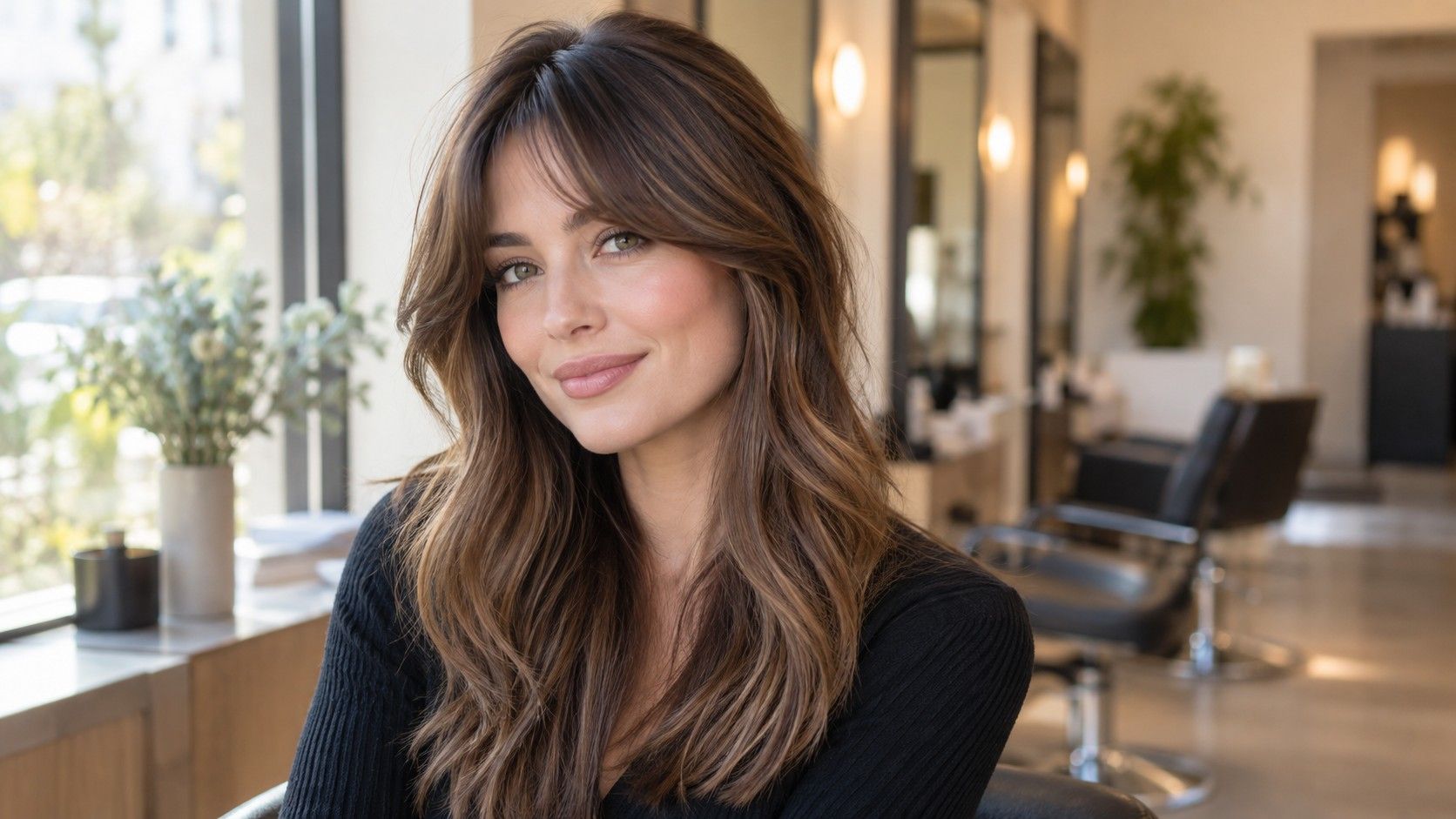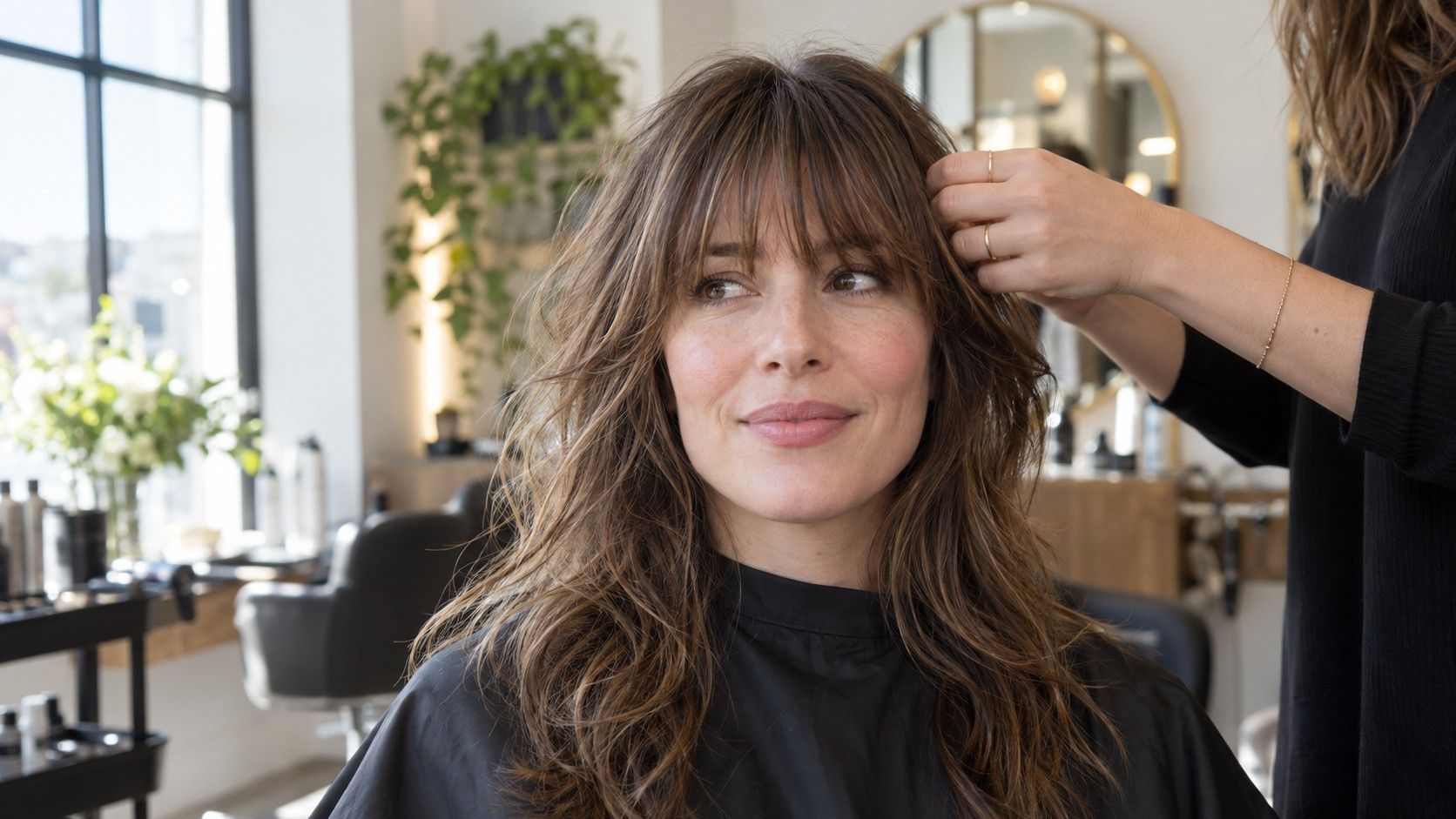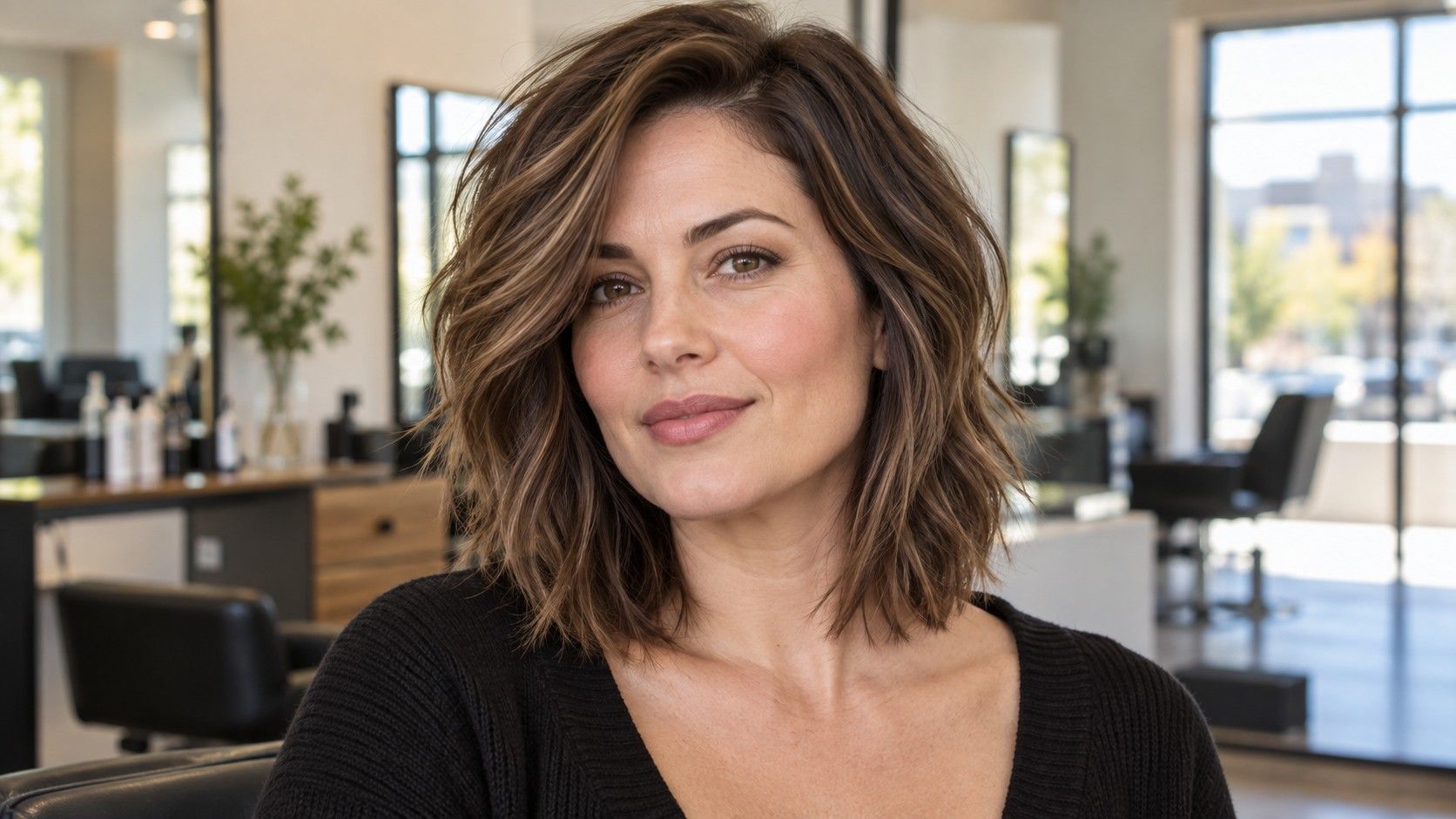
A square face can have a broad forehead, similar cheek and jaw width, and a defined jawline, but people rarely fit a diagram exactly. The most useful haircut advice does not try to erase structure. It helps you decide whether you want softness around the face, a stronger graphic shape, or enough movement that the cut feels easy on days when you do not style it.
What square-face advice gets wrong
The tired rule that square faces must avoid anything blunt is too simple. A clean bob can look excellent with a strong jaw, and a centre part is not automatically off limits. What matters is the combination of line, texture, and placement. A blunt edge at jaw level with flat roots and pin-straight hair creates a different effect from the same edge paired with soft bend and volume at the temples.
Start with your hair rather than a label. Fine, straight hair may need a denser perimeter to avoid looking transparent. Thick hair may need internal shaping so that a bob does not become a solid block. Natural waves introduce softness before any layers are cut. Tell the stylist how you normally wear your hair, whether you tuck it behind your ears, and how it behaves in damp weather.
It also helps to name the feature you enjoy. A defined jawline can be part of the appeal of a short haircut. If your goal is to draw attention upward to the eyes, fringe and temple movement may help. If you want a polished, architectural look, a precise line may be exactly right. There is no need to make every choice corrective.
Useful length choices
The best hair length for a square face depends on the silhouette you want. Short cuts can expose the jaw and cheekbones with confidence. A chin-length cut can frame the lower face; it may look crisp or soft depending on its ends. Collarbone-length hair gives room for waves and can be tied back. Longer hair creates a vertical line, but face-framing layers keep it from feeling severe.
Where the perimeter lands is more useful than a generic short-versus-long rule. A line ending exactly at the jaw puts attention there. A bob that sits a little below the jaw can create a gentler transition. A longer lob with movement through the cheeks tends to spread visual interest across the middle of the face. Look at references from the front and side, not only a posed three-quarter photo.
Ask to see the cut with your head moving. A haircut that looks balanced in a still mirror can separate in a way you dislike when you laugh, turn, or tuck one side behind an ear. The way the front pieces reconnect after that movement is a better test of everyday wear.
| Option | Useful when | Maintenance point |
|---|---|---|
| Textured chin bob | You like a visible jawline with softer ends | Needs shape checks as it grows |
| Collarbone lob | You want styling flexibility and easy pinning back | May need waves for the fullest effect |
| Long layers | You want to keep length but reduce heaviness | Layers need enough density at the ends |
| Short crop with fringe | You want the eyes and cheekbones to lead | Requires more frequent cuts |
Bobs and lobs without a hard outline
A bob is often a good haircut for a square face because it offers a clear place to build texture. The key is deciding whether the outline should be sharp, softened, or slightly graduated. Soft point-cut ends, a broken-up wave, or longer pieces at the front can change the mood without making the haircut vague. A lob is a lower-risk option if you are unsure about a shorter length.
Very blunt bobs are not bad, but they ask more from the styling. If you want that graphic shape, discuss the parting and root volume that keep it intentional. A heavy, centred, untextured bob can become boxy on dense hair. A subtle side part or a slight bend in the mid-lengths often adds the contrast that makes the line feel modern rather than rigid.
For naturally curly or wavy hair, get the length checked dry. Shrinkage changes where a bob lands, and the wrong half-inch can turn a collarbone plan into a chin plan. A stylist who sees the texture settle before finishing the perimeter can make a much more reliable recommendation.
Styling for movement around the jaw
Movement does not mean forcing every haircut into beach waves. It means placing bend where it helps the shape breathe. A loose wave beginning around the cheekbones or just below the jaw softens the transition from hair to face. The ends can stay fairly straight. With a blow-dryer, use a medium brush to direct sections away from the face, then let them cool before brushing them out.
A side part is another useful option. It creates an asymmetrical line across the forehead and gives one temple more lift. It can be especially practical if you have a cowlick that resists a precise centre part. Do not force the part to sit unnaturally; work a little to one side of the hair's preferred direction and the style will last longer.
Product should match density. Fine hair usually needs a light mousse or root spray, while thick hair may respond better to a small amount of smoothing cream through the ends. Too much oil near the roots collapses volume and makes the outline look heavier. Start with less than you think and add only after the hair is dry.
Fringe, layers, and face-framing pieces
Soft layers are useful when they create a purpose: cheek-level movement, a lighter edge, or a bridge between a fringe and the rest of the cut. Layers cut too short on the crown can create height while leaving the sides flat, which is rarely the intended result. Ask where the shortest layer will live and how it will look after air-drying.
Fringe can move attention toward the eyes. Curtain bangs work when the hair supports a natural opening; side-swept bangs are often easier with a strong side part. A full fringe makes a bold horizontal line and needs a regular trim schedule. If you have fine hair, avoid taking an oversized triangle from the front, as the sides may lose the density needed for the overall haircut.
Long face-framing pieces are a quieter alternative to bangs. They can begin around the cheekbones and blend into the perimeter, leaving the forehead open. This is a useful route for anyone who wants softness but does not want to blow-dry a fringe every morning.
Leave the salon with a plan you can repeat
Bring references that match your texture and point to the specific detail you want: a broken bob edge, a side part, longer front pieces, or a low-maintenance fringe. Also say what you will not do. If you will not use a curling iron, a cut that only looks soft with heat is not the best hairstyle for a square face for you.
Ask for a quick demonstration using the tools you own. Find out whether the style needs a round brush, diffuser, clips, or simply product and air-drying. The successful choice is not the one that changes your face shape; it is the one whose structure, texture, and upkeep make sense together after the salon light is gone.