The best haircut for wavy hair starts with the hair you have on an ordinary wash day, not the version created by a salon blowout. Waves can look smooth near the roots, bend at the ears, and become almost curly at the ends. Their shape changes with density, length, humidity, and the amount of product left in them, so a cut needs a clear weight line before it needs another styling product.
Identify your wave before choosing a cut
Look at your hair after it has dried with minimal handling. Notice where the first bend appears, whether the wave forms in consistent sections, and how much it shrinks. Fine, loose waves often need a compact perimeter to look full. Dense waves can hold a more layered shape, but they can also become too wide if every layer is cut short. A stylist needs to see this difference before deciding on a bob, shag, or long layers.
Bring photos of your own hair in three states: freshly washed, air-dried, and styled the way you normally wear it. That is more useful than a single inspiration image with a different texture. Say whether you diffuse, straighten occasionally, or avoid heat completely. A haircut that relies on a large round brush is not low-maintenance just because the shape looks effortless in a picture.
Wavy hair is not a lesser form of curly hair that needs to be corrected. It has its own practical issue: it can look limp if cut too heavily and frizzy if cut too lightly. The goal is to preserve enough weight for the wave to gather while removing the bulk that makes the outline triangular.
The role of the weight line
The weight line is where the haircut appears to end and hold its fullness. On wavy hair, it can determine whether the cut looks intentional after air-drying. A blunt or softly textured line at the jaw, collarbone, or chest gives the wave something to sit against. If the ends are over-thinned, individual pieces can drift apart and the hair may look less dense than it is.
For a short or medium cut, ask where the perimeter will land when dry. Wavy hair can spring up enough to turn a collarbone plan into a shoulder-length result. A dry check near the end of the appointment is valuable, especially if you are changing length significantly. It lets the stylist rebalance the visible shape rather than relying on wet length alone.
Density changes the approach. Fine wavy hair often benefits from fewer, longer layers and a firmer bottom edge. Thick wavy hair may need internal weight removal, but that should not mean indiscriminate thinning. Overuse of thinning shears can create short pieces that puff out and make the surface look fuzzy. Ask how bulk will be removed and where the shorter pieces will sit.
| Cut direction | Often works for | Check before committing |
|---|---|---|
| One-length lob | Fine to medium waves needing fullness | Will the ends have enough movement? |
| Long, gentle layers | Waves that need shape without losing length | Are the shortest layers below the widest point? |
| Textured bob | Medium density hair with a reliable wave | Where will it sit after shrinkage? |
| Modern shag | Dense hair that likes visible texture | Can you style the fringe and crown routinely? |
Layering without turning waves into fluff
Layers are helpful when they release a heavy area or encourage a wave that is being pulled straight by its own length. They are not helpful when they are used as a universal remedy. On fine hair, many short layers can make the surface look full for an hour, then leave wispy ends and a halo of flyaways. On dense hair, a few carefully placed layers can create a better outline than a head full of disconnected pieces.
Ask the stylist to explain the shortest layer. If it begins at the cheekbone or crown, it will have a strong visual role. If you wear your hair tucked behind the ears, those pieces may pop out in front of the face. If you often wear it half-up, check that the layers do not create a shelf at the back. These are small practical tests that reveal whether a fashionable shape fits your routine.
A dry cut can be useful for waves because the stylist sees each section's actual spring and direction. It is not required for every client or every method, but a dry assessment is worth requesting. The important thing is that the final shaping happens with the natural pattern visible, rather than treating damp, stretched hair as the finished design.
Bob, lob, or shag: choose the daily version
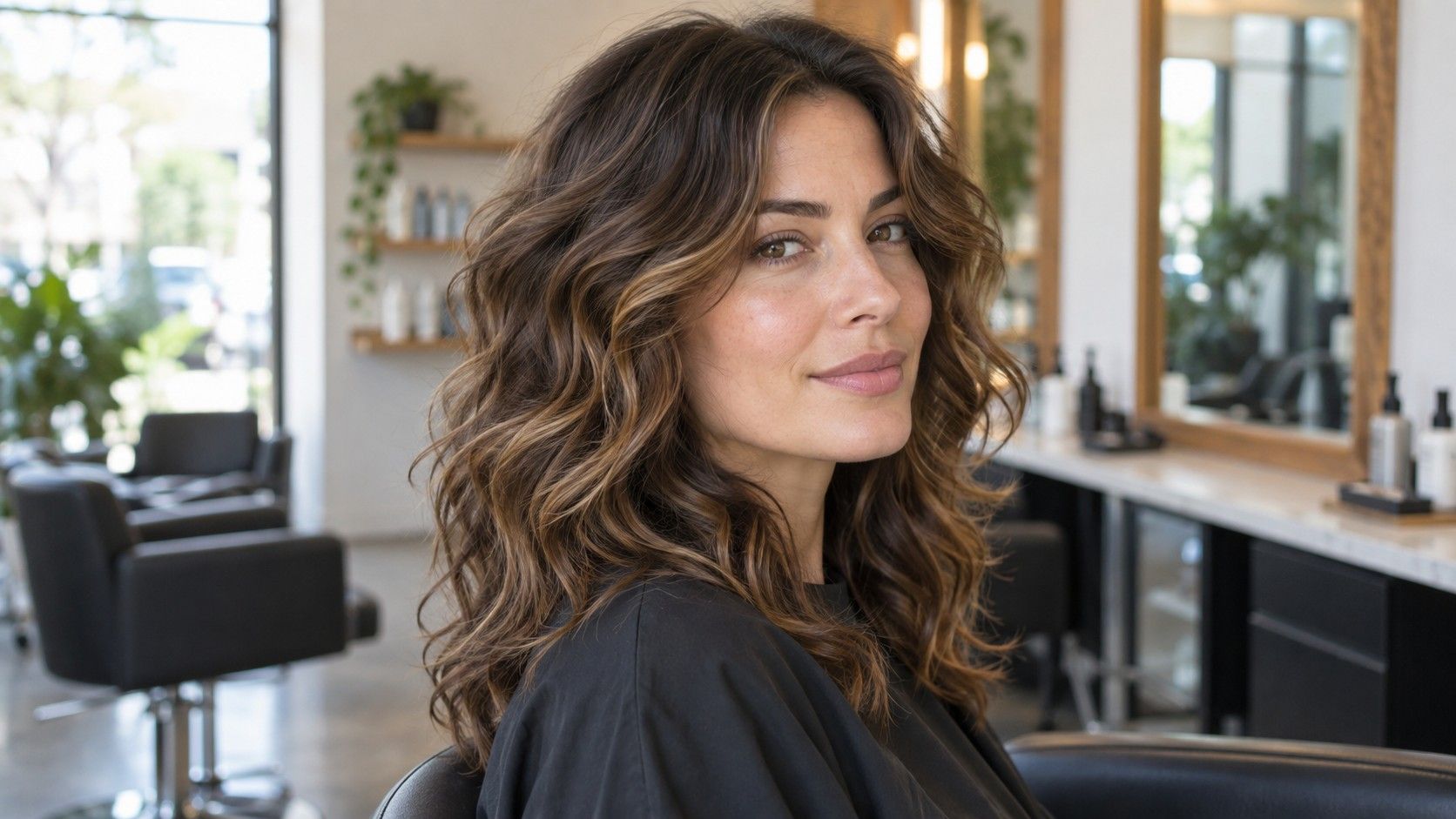
A bob is one of the best haircuts for wavy hair when you want a compact, expressive silhouette. It works well if your wave begins close enough to the root to create side body. A jaw-length bob can be playful and strong, but it needs a dry-length consultation. A collarbone lob gives more forgiveness: it can be tucked, clipped, or tied back while still giving the waves a defined outline.
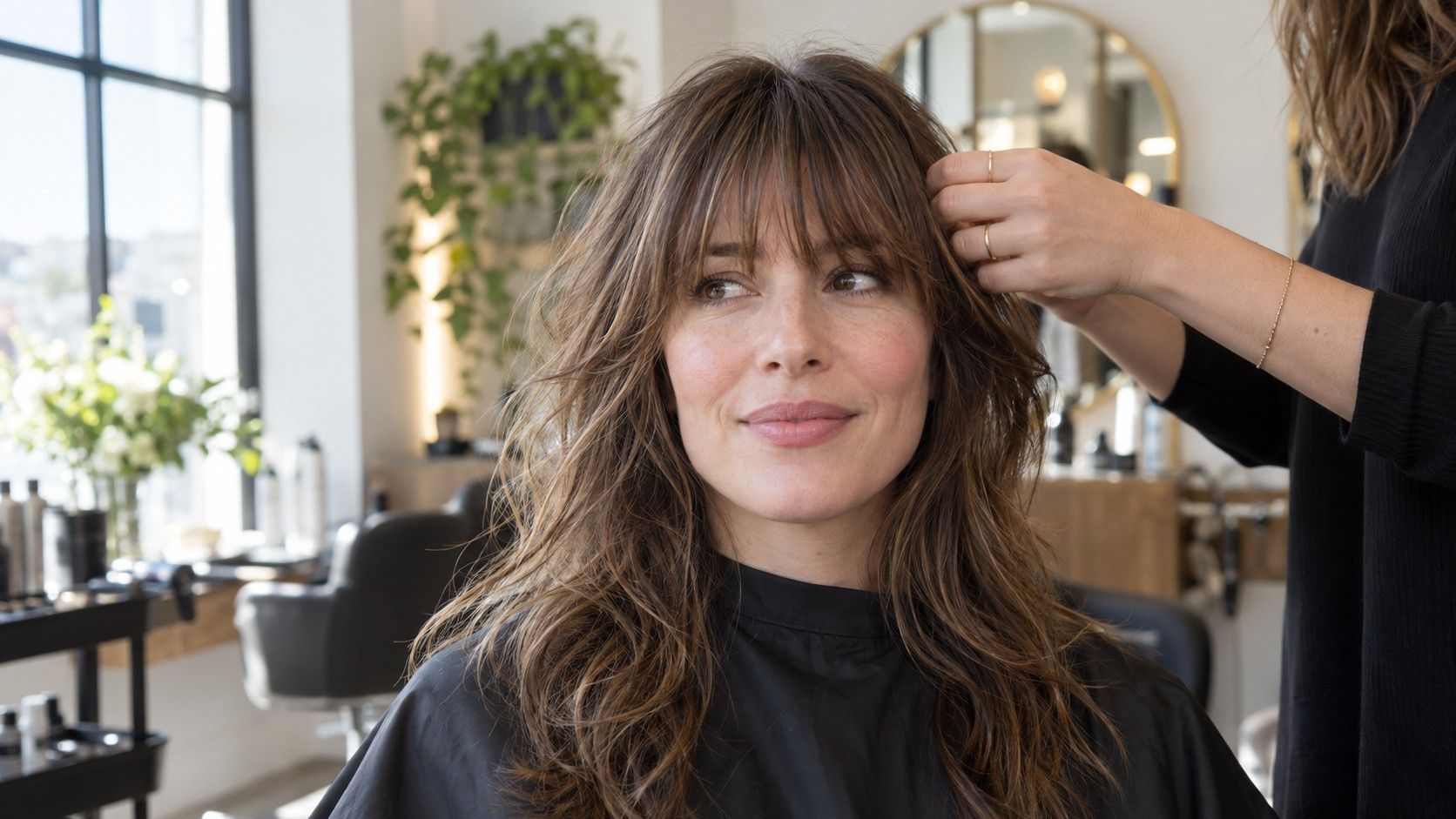
A shag is better for someone who enjoys visible texture and accepts some variation from day to day. It can give dense hair welcome lift, especially with a fringe, but it is not automatically wash-and-go. The crown, face layers, and fringe need attention, and the cut can lose its rhythm when it grows out. Ask to see a version that is air-dried, not only carefully diffused.
Long hair can carry waves beautifully when the perimeter is preserved and face-framing layers are not cut too high. If you want to keep length, focus on one or two purposeful adjustments: reshape the bottom line, add layers that begin below the chin, or introduce a long curtain fringe. A dramatic layer map is not the only way to make a change.
Explain your needs to a stylist clearly
Say what you are trying to solve in your own words: "My ends go flat," "The back gets bulky," or "My front pieces never join the rest." Then show your hair dry. Mention your wash frequency, product tolerance, and whether you need to put it in a ponytail. This makes the appointment more useful than asking for a named cut that may mean different things to different stylists.
Ask about the weight line, shortest layer, and dry length. Those three questions reveal whether the proposed best cut for wavy hair is designed for your texture. If you wear glasses, bring them; if you work out often, say so. Fringe and face layers behave differently when they are repeatedly clipped away or exposed to sweat.
At the end, ask for a simple home routine: how wet the hair should be when product goes in, whether to rake or scrunch, and how to refresh the next morning. A complicated product list is not a substitute for a good shape. The right haircut leaves your waves recognisable and gives them a reliable outline even when the weather does not cooperate.