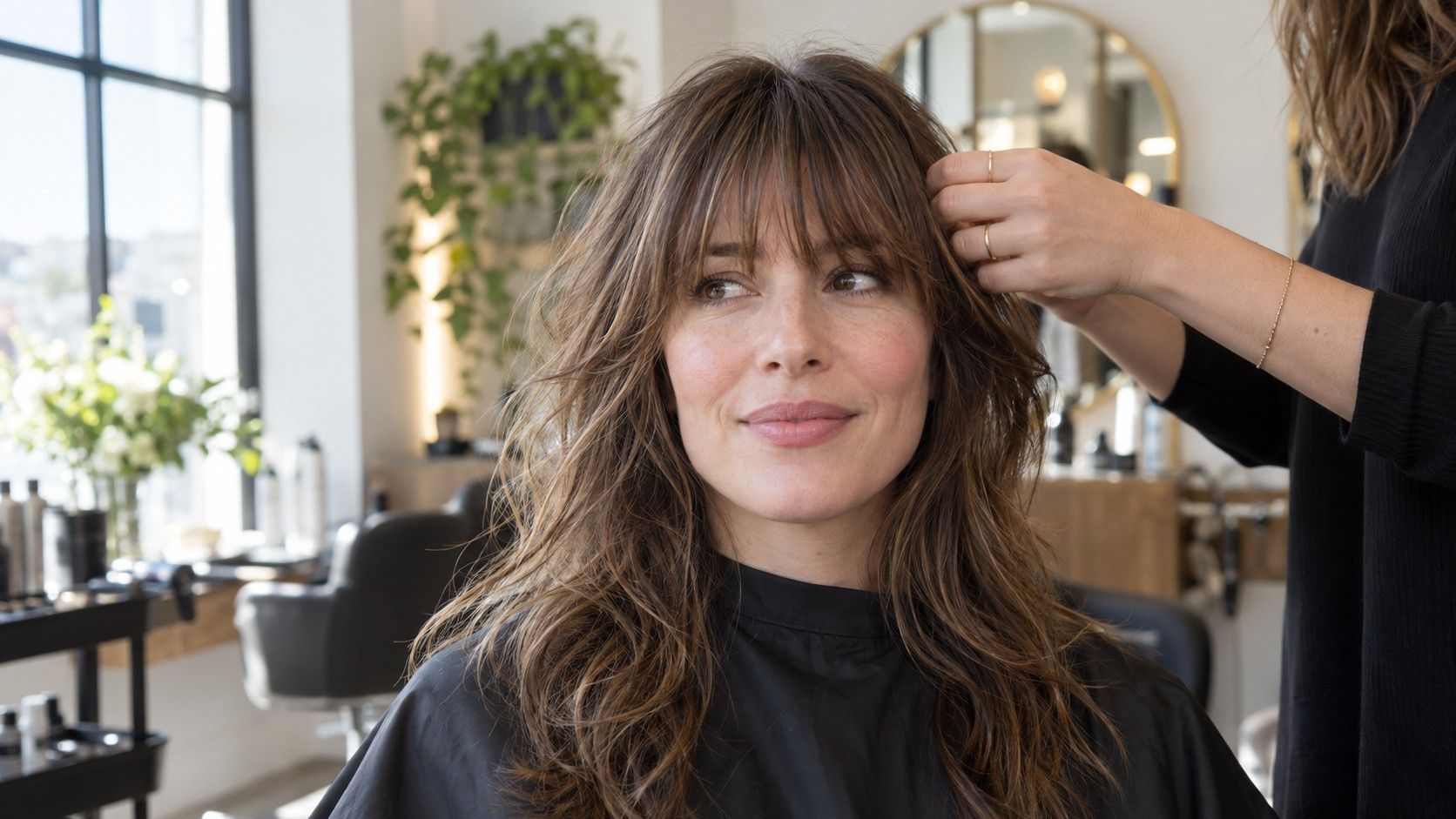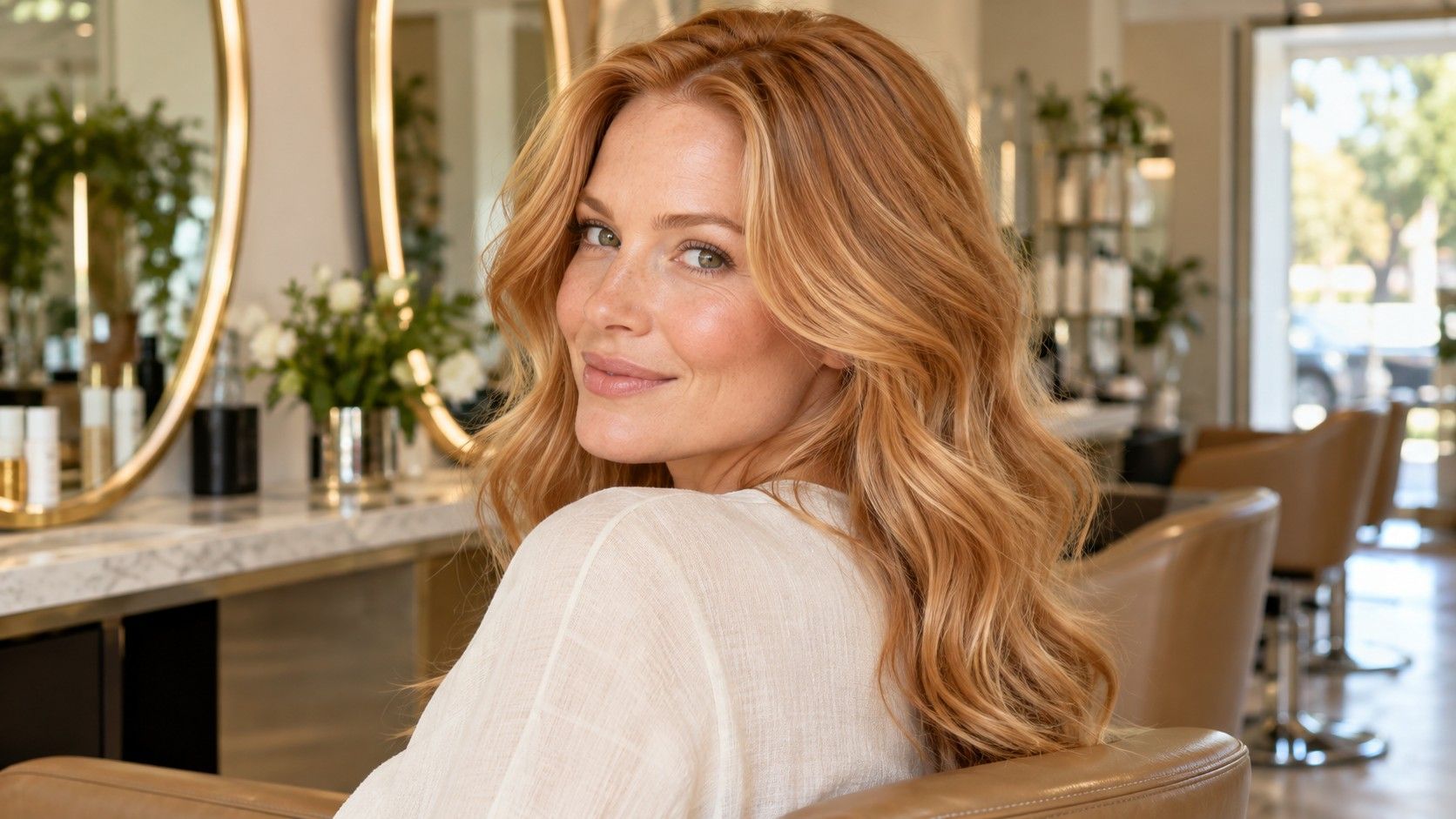
Warm Spring hair colors are often reduced to “go golden,” which is how people end up with a brassy blonde they did not ask for. The useful part of the idea is simpler: some complexions look clearer beside warmth that is sunny, light enough, and not dulled by too much grey or darkness. You do not need to accept a seasonal label to use that observation. Treat it as a way to compare shades at the salon, then keep the one that makes your own face look rested.
What Warm Spring needs from colour on an ordinary day
The key is usually warmth with clarity. A flat ash brown can make a golden or peach-toned face look unexpectedly tired, while a dense dark chocolate can put a shadow around features that are naturally light and bright. That does not mean every Warm Spring needs blonde. It means the colour should have some reflected light: honey, apricot, golden beige, caramel, or chestnut with a warm sheen.
Check this in daylight before deciding. Stand near a window with your hair pulled back and hold a muted grey scarf beneath the chin, then a warm camel or clear coral fabric. If the warm fabric makes the eyes and lips appear without adding makeup, that is a useful clue. It is not a diagnosis. It simply tells you why a little gold in the hair may work better than an icy toner.
Choose a blonde with enough gold, not enough yellow to fight
Strawberry blonde, honey blonde, and golden beige are the familiar Warm Spring options, but each has a different level of drama. Strawberry blonde has a soft red note and looks convincing when brows are not too dark. Honey blonde gives warmth without overt copper. Golden beige is the quieter route for someone who wants a polished blonde but finds platinum severe. The best choice depends on how much brightness your natural hair can support.
Ask for dimension rather than one blanket tone. A deeper golden root, lighter pieces through the crown, and a few warm face-framing strands make blonde look breathable. Solid yellow-gold is difficult because it tends to get louder after a few washes. A gloss can provide warmth without committing every strand to it, which is a sensible first move if you have lived in ash blonde for years.
| Starting point | Warm Spring direction | Be careful with |
|---|---|---|
| Natural light blonde | Honey, golden beige, soft strawberry | Violet toner used too heavily |
| Medium brown | Caramel ribbons or golden balayage | Chunky contrast at the root |
| Dark brunette | Chestnut gloss, amber ends | Trying to reach pale blonde in one visit |
| Previous highlights | Apricot-beige toner and lowlights | Adding more bleach before assessing condition |
Make brunette warm without making it look orange
Golden brown and chestnut are often more practical than blonde for a person who wants warm spring hair colour but does not enjoy root maintenance. A medium golden brown can keep the complexion clear while preserving enough depth for dark lashes and brows. The trick is translucency: a brunette base with fine caramel movement catches light; a dense orange-brown layer can look artificial even when the underlying warmth is right.
Look at the shade outside. Salon lighting can make almost any brunette gleam, but natural overcast daylight is stricter. If the colour reads like one flat block in a phone photo, ask whether a few lowlights or a softer root would help. Richness comes from variation, not just from adding more pigment.
Consider reds that stay light on their feet
Warm Spring-friendly reds are usually clearer than wine-red and lighter than heavy mahogany. Strawberry, peachy copper, light auburn, and cinnamon can enliven a golden undertone without swallowing it. The risky version is a dark red-brown with too much violet; it may be fashionable, but it can make a bright complexion look separate from the hair.
Red deserves a realistic conversation about fading. Copper is lively when fresh, but porous ends can fade faster and turn more orange than intended. Ask for a strand test if your hair has bleach history, and ask what a refresh involves. A semi-permanent gloss is often enough to test the family before you turn a one-hour curiosity into a long correction appointment.
Keep brightness and depth in balance at the hairline
Brightness near the face is powerful. A few golden pieces at the temples can make the skin look clearer even if the rest of the hair remains brunette. But a very pale face frame next to a dark root can read like a stripe, especially when hair is worn up. Ask to see where the brightness will begin and how it will grow out; placement matters more than the label “balayage.”
Brows provide another limit. If they are naturally medium or dark, leave enough root depth to connect hair to the face. If they are very light, a gentle root shadow can still help, but an espresso root may look borrowed. I prefer a small, reversible adjustment first: a warm gloss, a subtle face frame, or lowlights that correct an over-ashy blonde.
Take photos that make the salon conversation useful
Bring one image for the amount of lightness you want, another for the warmth, and a third for the placement. These are often three different photographs. Saying “I want strawberry blonde” can mean anything from pale gold to clear copper; the separate references save everyone from guessing. Also bring a photo of your hair in normal daylight, not only a styled portrait.
Before you leave, look at the result by a window and ask what it will look like after the gloss fades. Warm Spring hair colors work best when they feel like a livelier version of the hair you could naturally have, not a colour that requires the same perfect lighting as the salon. That is a much sturdier standard than a seasonal promise.
Give the colour one normal week before judging it
Freshly styled hair has shine that no formula can guarantee at home. Wash it once, use your own parting, and look at it during a cloudy morning as well as under evening lamps. If the warmth still keeps the skin clear without looking yellow, the balance is probably right. If it suddenly feels too orange, a transparent beige gloss is often a smaller correction than adding more ash.